
General aviation apps have fundamentally changed how pilots plan, train, and fly. A decade ago, preflight planning meant paper charts, printed NOTAMs, and a call to Flight Service. Today, a $10 monthly subscription gives a student pilot access to real-time weather, dynamic routing, terrain awareness, and electronic logbook syncing — all from a device that fits in a flight bag pocket.
Last Updated: May 7, 2026 | By: The E3 Aviation Editorial Team
The best general aviation apps don’t replace pilot judgment. They extend it. They eliminate the cognitive load of manually computing wind correction angles or memorizing sectional chart symbology so that pilots can focus on the work that matters: managing the flight, reading the environment, and making good decisions in real time.
This guide covers the apps that are actually changing how GA pilots train and fly — not a comprehensive list of everything in the App Store, but the tools that have demonstrated real value for real pilots doing real flying.
ForeFlight: The Standard All Other General Aviation Apps Are Measured Against
ForeFlight has been the benchmark general aviation app for more than a decade. It does more things better than any other single app in the GA space: flight planning with winds-aloft routing, sectional and IFR chart display, weather visualization, NOTAM integration, performance planning, and electronic logbook. It syncs across devices and integrates with a growing list of avionics systems via Bluetooth and Wi-Fi.
For IFR pilots, ForeFlight’s instrument charts and approach plate display are among the clearest available. The plate viewer supports georeferenced approaches, which means the app can show your aircraft’s position on the approach plate in real time. That’s a capability that used to require expensive panel-mounted hardware. Now it runs on an iPad Mini.
The performance planning tools handle weight and balance, takeoff and landing distance, and cruise performance calculations with actual aircraft data. You input your aircraft’s specific numbers; ForeFlight does the math. For pilots who previously worked these calculations by hand or via paper worksheets, the time savings and error reduction are significant.

We’ll be straight with you: ForeFlight is not cheap. The performance and IFR tiers run $100–$200 per year depending on features. For students or pilots who fly infrequently, that’s a meaningful expense. But for active GA pilots who fly regularly and especially for IFR-rated pilots, the subscription pays for itself in time saved and risk reduced.
Garmin Pilot: The Best General Aviation App for Garmin-Equipped Aircraft
Garmin Pilot earns its place alongside ForeFlight for one specific reason: if your aircraft has a Garmin avionics panel, Garmin Pilot integrates with it more deeply than any other app. It connects to the GTN series, G3X Touch, and G1000 systems via Garmin’s Flight Stream Bluetooth adapter, syncing flight plans bidirectionally between your tablet and your avionics.
That bidirectional sync is the key differentiator. With ForeFlight, you can push a plan to compatible Garmin units but not easily pull them back. With Garmin Pilot, updates made on either the panel or the tablet propagate to both devices automatically. For pilots who build complex IFR routes in the cockpit, that capability eliminates a significant workflow friction point.
Garmin Pilot’s weather display is excellent, with particular strength in radar animation and wind visualization. The traffic display integrates well with ADS-B receivers, and the airport information pages are comprehensive. As a standalone planning tool, it’s competitive with ForeFlight across most functions.
CloudAhoy: The General Aviation App That Makes Debriefing Worth Doing

CloudAhoy does one thing: it records your flight in detail and gives you tools to analyze it afterward. Track, altitude, airspeed (via GPS-derived ground speed), turn rates, and vertical speed — all plotted against time and overlaid on sectional charts and approach plates. For students and instructors, it transforms every flight into a data-rich debrief resource.
The approach analysis feature is particularly useful for IFR students. After flying an instrument approach, CloudAhoy plots your track against the published approach path, shows where you deviated laterally and vertically, and timestamps each event. Instructors can review the debrief with students and discuss specific decision points with precision rather than from memory.
CloudAhoy integrates directly with ForeFlight and Garmin Pilot, which means flight logs recorded in those apps can flow automatically into CloudAhoy for post-flight review. The basic tier is free; advanced features run about $50 per year — a price that is easy to justify for pilots who train regularly.
Sporty’s E6B and ATIS/Weather Apps: The Utility Layer
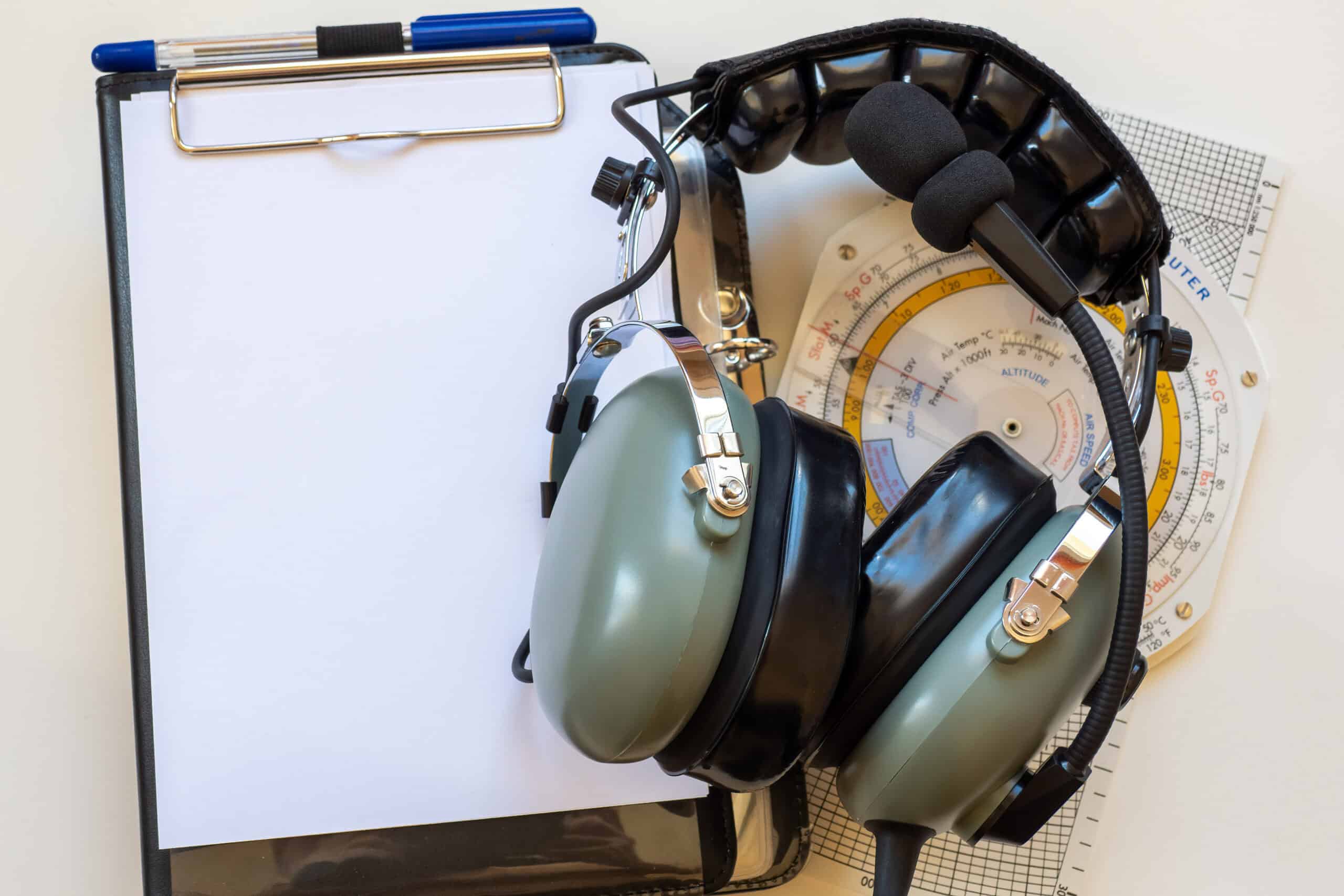
Not every useful general aviation app is a subscription platform. Sporty’s E6B flight computer app does exactly what its name suggests: wind correction, time-speed-distance, fuel burn, density altitude, and crosswind component calculations. It’s the digital version of the mechanical E6B that most pilots learn on during private training, and it’s free.
Similarly, the Aviation Weather Center app from the National Weather Service provides direct access to METARs, TAFs, PIREPs, AIRMETs, and SIGMETs in a format optimized for pilot use. It’s free, it’s official, and it pulls data directly from the FAA’s weather database. For preflight weather assessment, it’s a reliable complement to the weather layers in ForeFlight or Garmin Pilot.
Stratus Insight: ADS-B Traffic and Weather Without the Subscription
Stratus Insight, from Appareo, is the companion app for the Stratus ADS-B receiver series. If you have a Stratus unit in your aircraft, this app displays ADS-B traffic and weather data on your iPad with a clean, intuitive interface. For pilots who want ADS-B situational awareness without investing in a panel-mounted receiver, the Stratus portable solution with Insight is one of the cleaner setups available.
The traffic display shows ADS-B Out targets as well as TIS-B rebroadcast traffic in the areas you’re flying. The weather overlay includes radar, METARs, and TFRs. For VFR pilots who want situational awareness beyond what their eyes can provide, Stratus Insight adds a meaningful layer of information for roughly $800 in hardware plus a free app.
Electronic Logbook Apps: LogTen Pro and MyFlightbook
Paper logbooks are legal and will remain so for the foreseeable future. But electronic logbooks offer search, analysis, and backup capabilities that paper simply can’t match. LogTen Pro is the most feature-rich electronic logbook app on the market, with currency tracking, automatic syncing with ForeFlight, and reporting tools that make certificate applications and employer submissions straightforward.
MyFlightbook is the free alternative. It’s web-based with iOS and Android apps, stores your data in the cloud, and handles all the basic logbook functions competently. For pilots who don’t need the advanced analytics of LogTen Pro, MyFlightbook covers the ground. Both integrate with ForeFlight’s logbook feature, giving pilots flexibility in how they manage their hours.
Additionally, both apps handle currency tracking automatically. You input your flights; the app tracks your three takeoffs and landings for night currency, your IFR approaches for instrument currency, and your passenger-carrying currency under FAR 61.57. Manual currency tracking from a paper logbook is error-prone. These apps are not.

How to Choose General Aviation Apps for Your Flying
The best app stack for a student pilot doing VFR training at a local airport is different from the best stack for an IFR-rated pilot flying cross-country in a complex airplane. Start with what your stage of training requires and build from there.
For student pilots: ForeFlight Basic or Garmin Pilot with an EFB subscription covers your planning and chart needs. Add CloudAhoy to make every lesson debriefable. Start using an electronic logbook from day one. Those three tools handle the majority of what you’ll need through your private certificate.
For instrument-rated pilots: add the performance planning tier of your chosen planning app. Get an ADS-B receiver if your aircraft doesn’t have panel-mounted traffic. Start reviewing your approaches with CloudAhoy after every IFR flight. Currency tracking through your logbook app eliminates the risk of flying while inadvertently out of currency.
For all pilots: the FAA’s Aviation Weather Center app is always worth having alongside your primary planning app. Official data, no cost, no subscription. Use it as a cross-check on the weather layers your planning app provides.
Frequently Asked Questions About General Aviation Apps
What is the best app for GA pilot flight planning?
ForeFlight is widely considered the best GA flight planning app for its combination of chart quality, weather integration, and performance planning tools. Garmin Pilot is an excellent alternative, especially for pilots flying Garmin-equipped aircraft where bidirectional avionics integration matters.
Are general aviation apps FAA-approved for IFR flight?
Electronic flight bags running apps like ForeFlight can be used as a primary means of navigation if they display current, approved aeronautical data. The FAA has issued guidance on EFB use under AC 120-76. Pilots are responsible for ensuring their app data is current and their device is functioning before relying on it for IFR operations.
Do I need an ADS-B receiver to use aviation weather apps?
No. Most GA planning apps including ForeFlight and Garmin Pilot display weather via internet connection on the ground. In the air, an ADS-B receiver provides traffic and FIS-B weather without cellular connectivity. An internet connection alone is not reliable for in-flight weather in areas with poor coverage.
Related Articles
Sources
- FAA Advisory Circular AC 120-76D — Electronic Flight Bags
- AVweb — Aviation Technology Coverage
- General Aviation News
How to Evaluate a New Aviation App Before You Trust It in the Cockpit
New aviation apps launch constantly. Not all of them deserve cockpit use. Evaluating an aviation app before trusting it in flight requires a specific framework — the same framework you’d apply to any avionics or equipment decision.
Data Currency and Source Transparency
The most important evaluation criterion for any aviation app is data currency. Where does the data come from? How often does it update? Who is responsible for accuracy? Specifically, aeronautical charts, NOTAMs, TFRs, and weather data are safety-critical. An app that uses stale data or doesn’t disclose its update cycle should not be trusted for flight planning or in-cockpit use. Reputable apps — ForeFlight, Garmin Pilot, FltPlan Go — publish their data sources and update frequencies clearly. If an app doesn’t, that’s a warning sign.
Offline Functionality
Cockpit connectivity is unreliable. Cell coverage drops at altitude, in rural areas, and in mountainous terrain precisely where you may need data most. An aviation app that requires an active internet connection for basic function is a liability in the field. Before adding any app to your cockpit workflow, test it in airplane mode. Download and cache all relevant charts, terrain data, and approach plates before departure. Verify that the app functions correctly without any connectivity. If it doesn’t, don’t depend on it for in-flight navigation.
Backup Strategy: Never Single-Thread Aviation Technology
No single app or device should be your only navigation resource. GA pilots who go tablets-only without a paper backup, a handheld GPS, or a panel-mounted moving map are single-threading their navigation. Single-threading fails when the single point of failure fails. The best cockpit technology setup is layered: primary navigation via certified panel avionics where available, supplemented by an EFB tablet, with a handheld GPS as a backup and current paper charts available. Each layer catches the failure of the layer above it.
Aviation Apps and FAA Regulations: What You Need to Know
Electronic flight bags are addressed in FAA Advisory Circular 91-78, which governs the use of portable electronic devices in the cockpit. Specifically, AC 91-78 allows operators to use electronic flight bag applications as supplements or replacements for paper charts, approach plates, and other aeronautical publications, provided the data is current and the device meets certain reliability standards. For Part 91 GA operations, the requirements are relatively simple: the app must have current data, the device must be secured in a way that doesn’t obstruct controls, and the pilot must maintain proficiency in its use.
Additionally, TFR monitoring via app is critical but not sufficient. Apps display TFRs based on FAA data feeds that may lag real-time TFR activations by minutes. For events that generate pop-up TFRs — VIP movements, stadium events, firefighting operations — call Flight Service or check 1800wxbrief.com directly to confirm TFR status before departure in potentially affected areas.
The Future of Aviation Apps: What’s Coming for GA Pilots
Aviation app development continues accelerating as the GA market demonstrates sustained demand for digital cockpit tools. Specifically, AI-enhanced weather interpretation — apps that don’t just display data but provide plain-language assessments of conditions along your route — is appearing in early commercial products. ForeFlight’s AI weather briefing features and similar tools from other providers represent the direction the market is moving.
Additionally, ADS-B integration with traffic analytics is improving. Future aviation apps will provide not just current traffic position but trajectory predictions — where traffic is going, whether it’s converging with your route, and at what point you’ll be closest. That predictive capability, currently available in a limited form, will become standard cockpit functionality for equipped GA pilots. The pilots who become proficient with today’s aviation apps will be well-positioned to adopt these next-generation tools as they mature.
E3 Aviation Editorial Team
The E3 Aviation Association editorial team is made up of licensed pilots, aviation educators, and industry professionals dedicated to advancing general aviation safety, community, and education. Learn more about E3 Aviation.