Mid-air collision avoidance is the safety skill most GA pilots think they’ve mastered and most pilots have never properly tested. The FAA’s right-of-way rules sound simple in the airman’s exam, but they break down in the real-world traffic pattern at any busy uncontrolled field. Here’s how the rules actually work, where pilots most commonly miss the application, and what the modern toolkit (ADS-B, traffic apps, even good comm discipline) can and can’t do to back you up.
Last Updated: June 11, 2026 | By: The E3 Aviation Editorial Team
Why Right-of-Way Rules Exist in the First Place
Right-of-way rules aren’t bureaucracy. They’re the agreed-upon traffic-pattern language that lets two pilots arriving at the same point in space know who flies through and who yields. Without that shared protocol, every traffic conflict becomes a coin flip. The rules don’t replace see-and-avoid — they replace the chaos of two pilots both trying to be polite at the same time.
The core rules live in FAR 91.113. If you haven’t read the actual regulation in the past 12 months, do that today. The text is short. Most pilots think they remember it accurately. Many don’t.
Mid-air collision avoidance depends on two things working together: knowing the rule that applies to your situation, and applying it before the other pilot has to react. If you wait until the conflict is obvious, the maneuver gets aggressive. Aggressive maneuvers in the pattern are exactly how mid-airs happen.
The Right-of-Way Rules That Actually Matter in Practice
The textbook teaches the rules as a list. In flight, they apply in a hierarchy, and three of them cover 90% of the conflicts you’ll see in a GA traffic pattern.
Aircraft on Final Approach Beats Everything Else
An airplane on final approach has the highest priority below pattern altitude. Period. You’re not going to argue with a Citation on a five-mile final because you turned base first. The rule prioritizes the aircraft closer to landing because it has fewer escape options.
Where pilots get this wrong: extending a downwind too far past the runway threshold because they don’t realize another aircraft is on a long straight-in final. The fix is simple. Make traffic calls at every position in the pattern. Listen to the other airplane’s calls. Build the mental picture before the conflict develops.
The Right-Hand Rule for Converging Aircraft
When two aircraft at the same altitude converge, the airplane on the right has the right of way. This is the rule pilots most often forget under stress. The pilot on the left is supposed to yield — usually by descending, or by altering course right.
However, the rule only matters if both pilots actually see each other. The right-of-way rule doesn’t help you avoid an airplane you haven’t seen. That’s why ADS-B IN and good visual scanning aren’t optional — they’re the inputs that make the rule applicable at all.
Overtaking — The Quiet Mid-Air Risk
When you overtake another aircraft, you alter course to the right and pass clear. You don’t get to honk and squeeze through. The aircraft being overtaken doesn’t have to do anything. The burden is entirely on the overtaking pilot.
Most overtaking incidents happen during a fast straight-in approach where the overtaking pilot doesn’t realize how much slower the airplane ahead is flying. A Bonanza descending behind a Cub on final has a closure rate that catches pilots off guard. Slow down, plan early, or extend.
Where Mid-Air Collisions Actually Happen
The NTSB data is clear: most fatal mid-airs happen below 3,000 feet AGL in the traffic pattern at uncontrolled airports in good VFR weather. That last part is the surprise — bad weather hides traffic, but good weather makes pilots complacent. The clearer the day, the more pilots assume they don’t need to scan as hard.
The geometry that produces a mid-air is usually one of three patterns. First, an aircraft on the 45 entering downwind on top of another aircraft already on downwind. Second, an aircraft turning base while another is on a long final. Third, a straight-in jet or fast piston overtaking a slow trainer in the same approach path. Train for all three.
The NTSB General Aviation Dashboard tracks these accidents and updates the trend lines quarterly. Read it. The patterns repeat year after year.
The Three Mid-Air Geometries Every GA Pilot Should Recognize
Drill into the NTSB data on mid-air collisions and three geometric patterns repeat with alarming consistency. Once you’ve seen them, you’ll spot the setup in your own pattern flying long before the conflict develops.
Pattern One: The Stacked Downwind
An aircraft on the 45-degree entry to downwind doesn’t see another aircraft already established on downwind below or above it. The classic version: a high-wing trainer on the 45 above a low-wing single already on downwind. The high-wing pilot can’t see down through the wing. The low-wing pilot can’t see up.
The fix is purely about the position call. If you’re on the 45 and you’ve heard a downwind call recently, you’re stacked. Call early, identify your position relative to the other aircraft, and adjust altitude. Don’t enter blind.
Pattern Two: The Base-to-Final Squeeze
An aircraft on a tight base meets another aircraft on a long straight-in final. The base aircraft turns early and rolls onto final right in front of the straight-in. Both pilots have line-of-sight obstructions. The conflict develops in the final 30 seconds before runway threshold.
The straight-in aircraft has the right of way once established on final, but the burden of avoidance falls on both pilots. The cure is comm discipline. The straight-in pilot should announce position at 5 miles, 3 miles, 1 mile. The base aircraft should hear those calls and extend if there’s any doubt about separation.
Pattern Three: The Overtake on Final
A fast aircraft on final overtakes a slow aircraft also on final. The classic version: a Bonanza or Mooney descending at 110 knots behind a Cub flying final at 55 knots. Closure rate inside the final mile is enormous. The fast pilot often doesn’t realize how slow the airplane ahead is.
The rule is clear: the overtaking aircraft alters course right and passes clear. In practice, the safer move is to break off the approach early and reposition. Don’t try to squeeze past a slow aircraft on short final. The geometry doesn’t forgive.
What the Modern Toolkit Actually Buys You
ADS-B IN, traffic display apps, and TCAS-equivalent equipment in newer GA panels have changed the math on mid-air avoidance. The buy isn’t perfect detection — it’s reduced search workload. Your scan doesn’t have to find every aircraft anymore; the screen flags most of them for you, and you focus visual attention on the ones it shows.
That said, the trap is exactly what makes the tools useful. Pilots who trust the screen completely miss the non-equipped aircraft. The cropduster, the experimental homebuilt, the antique without electrical equipment — none of them shows up on your traffic display. The pilot who’s stopped scanning won’t see them either.
Treat ADS-B as a second pilot, not as a substitute for the first one. The screen tells you where most of the traffic is. Your eyes find the rest.
Modern Tools Don’t Replace Looking Out the Window
ADS-B IN, traffic display apps, and even TIS-B coverage are genuinely useful. They’ve moved mid-air collision avoidance from “pure see-and-avoid” to “see-and-avoid plus electronic backup.” But the moment a pilot starts trusting the screen more than the windscreen, the system fails.
Here’s where we’ll be straight with you: ADS-B doesn’t show every aircraft. Some non-ADS-B traffic is invisible to your display. Some aircraft don’t transmit altitude correctly. Some have intermittent equipment. The screen will lie to you eventually, and the only backup is your eyeballs.
For an effective scan, use the FAA’s recommended pattern: divide the windscreen into 10-degree sectors and pause briefly on each. Don’t sweep — the eye doesn’t see motion when it’s sweeping. It sees motion when it’s stationary and something moves through the field. Hold each sector for one to two seconds.
For a deeper read on how to integrate weather, traffic, and pattern decisions, our Reading AIRMETs and SIGMETs guide covers weather decision-making at the same level of practical detail. The two skills work together.
Comm Discipline at Uncontrolled Fields
Position reports on the CTAF are the single highest-leverage thing you can do to prevent a mid-air at an uncontrolled airport. Make calls at every position: 10 miles out, entering the pattern, downwind, base, final, and clear of the runway. Each call gives every other pilot in the pattern a chance to build a mental picture.
Bad calls produce more risk than no calls. Calls that don’t include the airport name, the aircraft type, or the specific position waste airtime and add noise. Use the standard format: “Smithville traffic, Cessna two-three-foxtrot, downwind runway one-seven, Smithville.” Three pieces of information. Done.
Honestly, this is where we’d push back on the FAA’s tolerance for sloppy comm. The pilot who calls “any traffic in the area, please advise” is creating noise. The pilot who calls clear, professional position reports is making the pattern safer. The difference is training and discipline.
Special Cases: Helicopters, Gliders, and Balloons
The right-of-way hierarchy in FAR 91.113 places balloons highest, then gliders, then airships, then powered aircraft. Helicopters generally have right of way over fixed-wing aircraft in some situations but not in others — they’re treated as powered aircraft for most purposes.
What this means in practice: if you’re inbound to a field that has glider operations, expect to yield. If you see a balloon below pattern altitude, assume it’s not maneuverable. Plan your pattern to avoid the conflict before it develops.
For straight comparisons with mid-air avoidance during pattern departures, see our CFIT Awareness for GA Pilots guide. Collision avoidance and controlled flight into terrain share the same underlying skill: knowing where everything is in three-dimensional space.
How Right-of-Way Rules Change in Class B, C, and D Airspace
The right-of-way rules in FAR 91.113 apply everywhere, but their practical application changes inside towered airspace. ATC is sequencing aircraft, providing separation instructions, and assigning landing order. The right-of-way rule becomes the default when ATC instructions don’t cover a specific conflict.
What this means for the GA pilot transitioning between airspace types: the rules don’t change, but the application does. Inside Class D, you follow tower instructions. If two aircraft cleared to land conflict on short final, the rule still applies — but the tower is supposed to resolve it before you have to. Outside towered airspace, you’re back to standard see-and-avoid with FAR 91.113.
The most dangerous transition is the moment you leave Class D airspace. You’ve been following tower instructions for the whole flight. Now you’re back to uncontrolled traffic with no ATC voice in your ear. The mental shift takes deliberate practice. Make a habit of explicitly reminding yourself when you’re transitioning back to uncontrolled airspace.
Building the Habit Loop That Saves Lives
Most fatal mid-air collisions trace back to a habit loop the pilot never built. The pilot didn’t make position calls because they hadn’t built the habit of making them every time. The pilot didn’t scan because they’d let the screen replace their eyes. The pilot didn’t yield because they’d never practiced yielding in low-stakes situations.
Building the habit isn’t about willpower. It’s about repetition. Every time you fly, make every position call. Every time you enter a pattern, do the 10-degree scan. Every time you see another aircraft on the ADS-B display, glance up and find it visually. Repeated enough times, these become automatic — and automatic is exactly what you want when the workload spikes.
The pilots who survive thirty years of GA flying without an incident built these habits early. The ones who didn’t, didn’t. It’s that direct.
What to Drill in Training Every 90 Days
Recurrent training for mid-air collision avoidance is the cheapest insurance you can buy. Every 90 days, work the following scenarios with a CFI or by yourself in a simulator:
Practice the 10-degree scan pattern in cruise at altitude. Time yourself. Most pilots think they’re scanning when they’re actually staring forward. Recurrent practice fixes that.
Run pattern entries at three different uncontrolled airports. Vary the wind, the runway in use, and the traffic on the CTAF. The more pattern entries you’ve executed under different conditions, the more automatic the position reports become.
Simulate ADS-B failure mid-cruise. Force yourself to scan visually for the next five minutes without looking at the traffic display. The discipline you build in that exercise is what saves you when the system actually fails.
Read one NTSB mid-air report per month. Pattern-match the conditions to your own typical flying. The patterns repeat. Learning from someone else’s accident is the cheapest training of all.
The Mindset That Prevents Mid-Airs
The pilots who avoid mid-air collisions for thousands of hours share a mindset. They assume there’s always traffic they haven’t seen yet. They make every position call, every time. They scan even when the ADS-B screen is empty. They yield early when there’s ambiguity, not late when there’s a conflict.
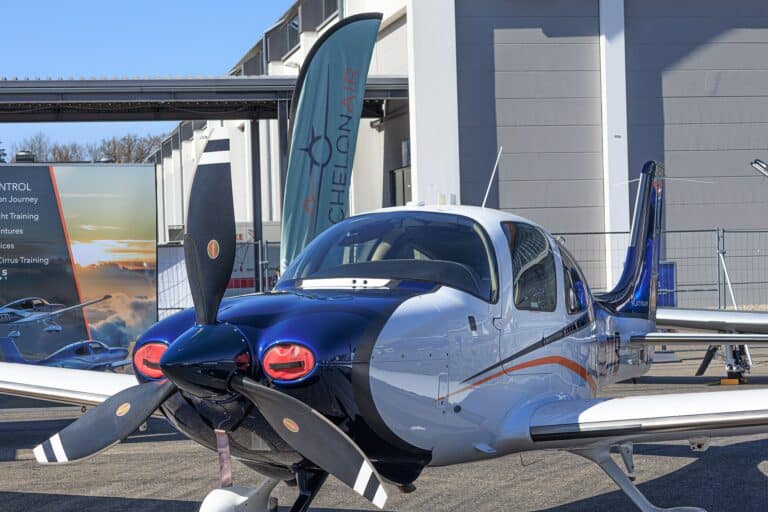
The Cirrus SR22 has CAPS for emergencies. Most GA aircraft have nothing comparable. Your eyes and your discipline are the safety system. Treat them that way.
For the broader E3 Aviation safety archive, browse our aviation articles library. Right-of-way rules, weather decisions, and pattern discipline all feed into the same skill: keeping the airplane and its occupants alive on every flight.
Frequently Asked Questions
If two aircraft are converging at the same altitude, who has the right of way?
The aircraft on the right has the right of way under FAR 91.113. The pilot on the left must yield, typically by altering course right or descending. This rule only works if both pilots actually see each other — ADS-B and visual scanning are the inputs that make the rule applicable in the first place.
Does ADS-B replace visual scanning for mid-air collision avoidance?
No. ADS-B IN is a backup, not a replacement. Not every aircraft transmits ADS-B reliably, and some don’t transmit at all. The system can fail without warning. Visual scanning using a 10-degree sector pattern remains the primary tool, with ADS-B and traffic apps as electronic backup.
What’s the most common location for fatal mid-air collisions?
NTSB data shows most fatal mid-airs happen below 3,000 feet AGL in the traffic pattern at uncontrolled airports in good VFR weather. The clear weather is the surprise factor — it makes pilots complacent. The traffic pattern is where the geometry produces the most conflicts, especially at the 45-degree entry and at base-to-final.
Sources
- FAA FAR 91.113 — Right-of-Way Rules
- NTSB General Aviation Accident Dashboard
- FAA Airplane Flying Handbook — Collision Avoidance
- SKYbrary — Right-of-Way reference
Related Articles


E3 Aviation Editorial Team
The E3 Aviation Association editorial team is made up of licensed pilots, aviation educators, and industry professionals dedicated to advancing general aviation safety, community, and education. Learn more about E3 Aviation.