

The conversations inside a GA cockpit reveal more about pilot culture than any other artifact. Good cockpit conversations sound boring to outsiders — efficient, professional, almost scripted. Bad cockpit conversations sound dramatic — confused, defensive, unfocused. The difference between the two patterns is the difference between flights that end safely and flights that end up in NTSB reports.
This guide covers what good cockpit conversations actually sound like, why radio discipline matters, how crew communication works in two-pilot GA operations, and the culture indicators that separate professional flying from amateur flying. Whether you fly solo or with a copilot, the discipline applies; the conversations you have with yourself in the cockpit are as important as the ones you have with anyone else.
Why Cockpit Conversations Matter
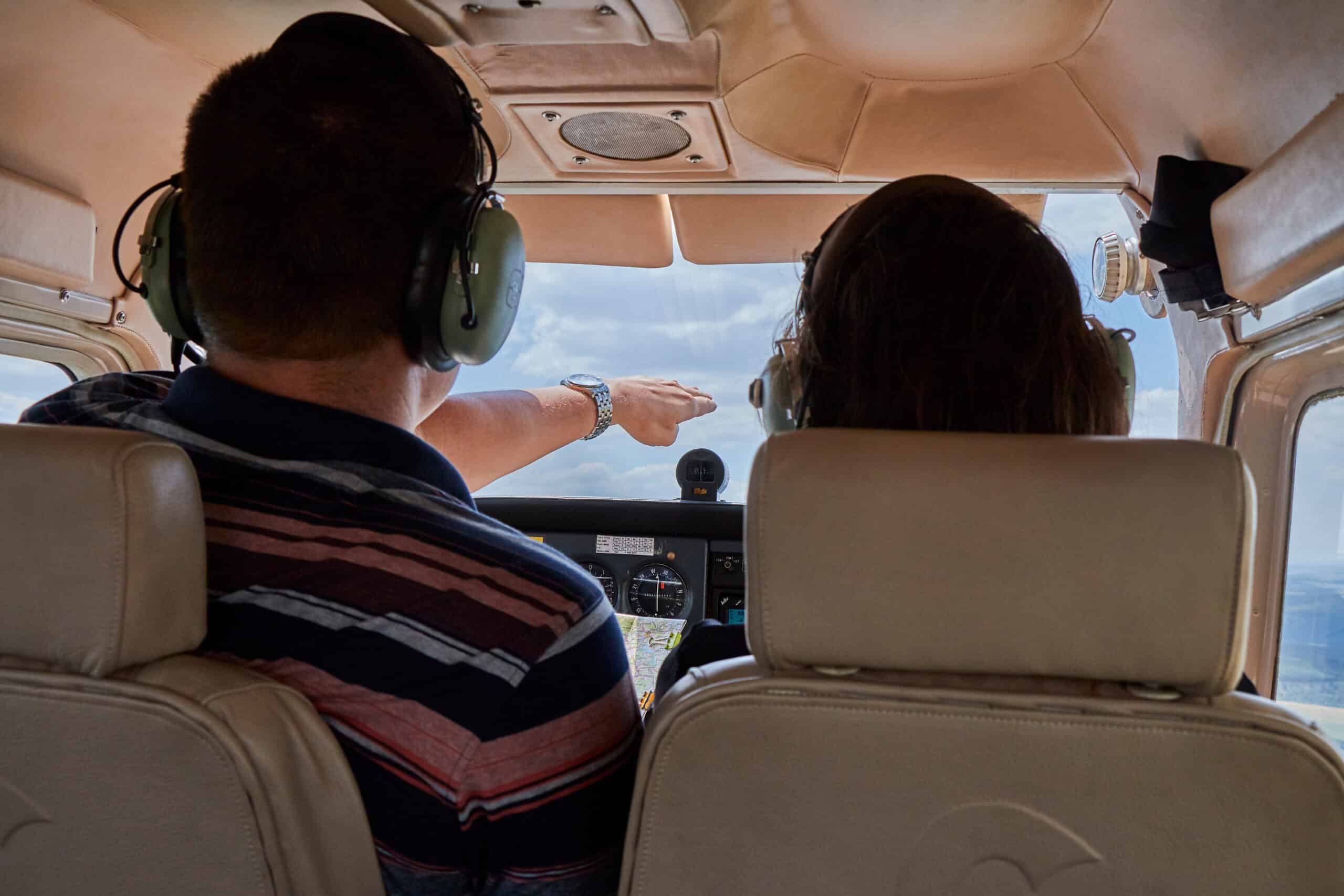
Communication failures show up in nearly every aviation accident chain. Pilots who couldn’t articulate their concerns, copilots who deferred to bad decisions, controllers who weren’t listening carefully enough to readbacks — all appear in NTSB causal factor lists. The training infrastructure for cockpit communication has evolved over decades, and the principles that emerged apply at every level from primary training through airline operations.
The underlying insight: communication is a safety system. Standardized phraseology, structured callouts, explicit verbalization of intent, and active listening all serve to reduce the variance in pilot performance. The pilots who follow these disciplines fly more consistently than the pilots who freelance their communications.
For GA pilots — most of whom fly single-pilot — the discipline still applies. The conversation isn’t with another pilot; it’s with the airplane, the radio, and your own internal monologue. Pilots who verbalize their checklist items aloud, who narrate their decisions, and who maintain professional radio discipline tend to fly more carefully than pilots who internalize everything.
Radio Discipline: The First Layer of Cockpit Culture
Radio communication is the most visible part of cockpit culture. Controllers, pilots, and observers all hear it. The radio discipline that pilots demonstrate shapes how other pilots and controllers interact with them.
The fundamentals: use standardized phraseology, read back clearances clearly and completely, use full call sign on initial contact and abbreviated thereafter, listen before transmitting to avoid stepping on other transmissions, and keep transmissions concise. Pilots who follow these conventions get smoother service from controllers and produce fewer communication breakdowns than pilots who freelance.
The mistakes are predictable. Pilots who readback “roger” instead of repeating the actual instruction force the controller to repeat or extend the clearance. Pilots who omit call signs from acknowledgments create confusion in busy frequencies. Pilots who transmit while another pilot is speaking force the controller to repeat both transmissions. None of these are dangerous in isolation, but they compound across a busy approach environment.
The discipline is learnable and improvable. Listening to LiveATC.net recordings of major airports is one of the cheapest improvements available — observe how professional pilots and controllers actually talk to each other. The patterns become internalized and translate directly to better radio work.
The Sterile Cockpit Rule and GA Equivalents
Commercial operations have explicit sterile cockpit rules — no non-essential conversation below 10,000 feet, focused entirely on the flight tasks. The principle is that distractions during critical phases of flight degrade decision-making and increase error rates.
GA pilots benefit from the same principle even though no regulation requires it. The high-workload phases — takeoff, climb, descent, approach, landing — are where most accidents happen. Conversations with passengers about weekend plans, jokes from the cockpit, or unrelated topics all consume cognitive resources that should be allocated to flying.
The practical application: brief passengers before each flight that conversation will be limited during certain phases, then enforce it. The brief can be polite and matter-of-fact (“I’ll let you know when it’s quiet enough to chat”). Most passengers accept this without issue. The pilots who maintain sterile cockpit discipline have measurably lower error rates during high-workload phases.
Self-Talk: The Conversation You Have With Yourself
Single-pilot GA flying is mostly an internal monologue, but research on pilot performance suggests that externalizing parts of that monologue — actually saying checklist items out loud, narrating decisions, verbalizing intentions — produces measurably better performance than silent thinking.
The mechanism is simple. Spoken language engages different cognitive pathways than silent thought. The act of articulating a thought makes it more concrete, easier to remember, and easier to catch when wrong. Pilots who say “gear down, three green, flaps to landing position” out loud are less likely to land gear-up than pilots who think those items silently.
The same applies to decision-making. Pilots who verbalize the factors going into a go/no-go decision tend to make more rigorous decisions than pilots who weigh the factors silently. The discipline takes some practice — talking to yourself feels strange initially — but the safety payoff is real and well-documented.
Crew Communication in Two-Pilot GA Operations
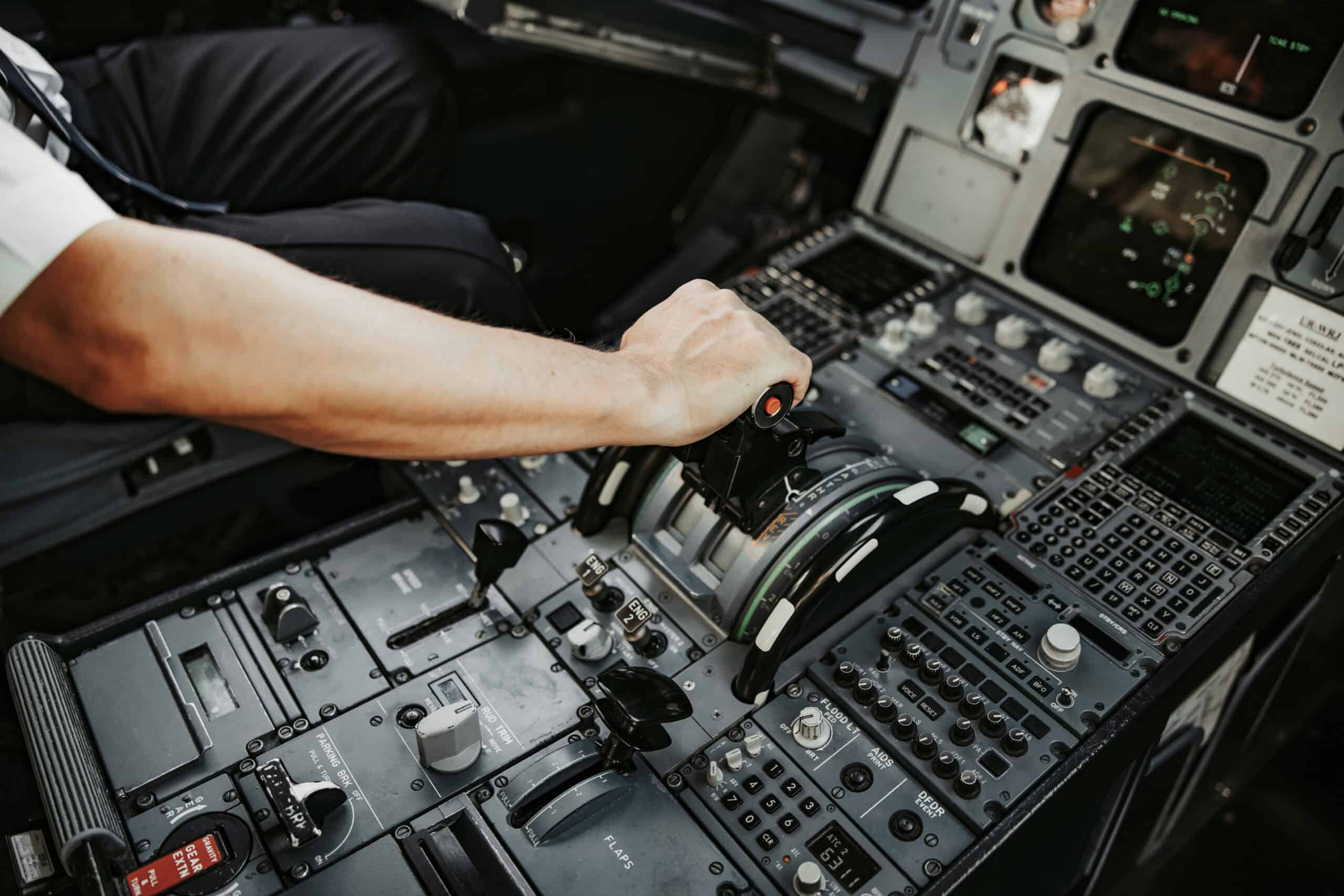
Some GA operations involve two pilots — owner-pilots flying with hired captains, instructional flights, dual instrument training, charter operations. The crew communication discipline in these operations is the foundation of safe two-pilot flying.
The basics: explicit assignment of pilot-flying and pilot-monitoring roles, standard callouts for altitudes and configuration changes, mutual cross-check of altimeter settings and frequency changes, briefings before takeoff and before each phase of flight. The procedures that airline crews use scale down to GA crew operations effectively.
The dangerous failure mode in two-pilot operations is “captain disease” — the more senior pilot making unilateral decisions and dismissing concerns from the junior pilot. Multiple GA accident chains have included a copilot who suspected something was wrong but didn’t speak up forcefully. The mitigation is explicit cockpit culture where speaking up is expected and welcomed.
The Crew Resource Management (CRM) literature has formalized these principles for decades. Modern airline training spends substantial time on CRM. GA pilots who fly with anyone else — instructors, fellow pilots, hired captains — should be familiar with CRM principles even when no formal training exists.
The Passenger Briefing as Cockpit Communication
Pre-flight passenger briefings are required by regulation but often treated as a formality. The briefing that actually serves the flight covers more than the regulatory checklist. It establishes communication expectations, identifies what the passengers need to do in normal and emergency situations, and creates the cockpit culture for that specific flight.
A good passenger briefing covers seat belt operation, door operation, fire extinguisher location, communication protocols (“press here to talk, release to listen”), sterile cockpit expectations (“during takeoff and landing I’ll need quiet”), and emergency procedures (where to exit, what to do if I’m incapacitated). The briefing should be standardized — the pilot says roughly the same words every flight — so passengers know what to expect.
The briefing also serves as a safety check on the pilot’s own readiness. The pilot who can’t deliver a clean briefing is signaling something about their preparedness. Pilots who treat the briefing seriously generally fly more carefully than pilots who rush through it.
Cockpit Culture Indicators
The conversations inside a cockpit reveal the culture of the flight. Good cockpit culture sounds professional, focused, and slightly boring. Pilots are following standardized phraseology, making explicit callouts, verbalizing decisions. Conversation between phases is appropriate but doesn’t intrude into critical phases.
Bad cockpit culture sounds different. Slang phraseology replaces standard phraseology. Callouts are skipped or shortened. Decisions happen without verbalization. Conversation continues into critical phases. The pilot may be functionally competent, but the operational margin is thinner because the communication discipline isn’t there to catch errors.
The cultural indicators apply across every flight environment. Professional flight schools maintain stricter cockpit culture than recreational operations. Career-pilot training builds the cultural patterns that persist into airline operations. GA pilots who train in environments with strong cockpit culture tend to retain those patterns even when flying alone for years afterward.
The Discipline of Active Listening on the Radio
Most pilots focus on what they’re going to say next when they should be listening to what’s being said. Active listening — concentrating fully on incoming transmissions, even when they’re directed at other aircraft — produces measurably better situational awareness and safer operations.
The benefit is concrete. Controllers issue traffic alerts to nearby aircraft that may affect your operation. They issue weather advisories that change as conditions develop. They give clearance amendments that reshape the flow at busy airports. Pilots who actively monitor frequency catch this information and adjust their operations accordingly. Pilots who tune out other transmissions miss it and operate with reduced awareness.
The skill develops with practice. Pilots who consciously practice active listening — even in low-workload phases — build the habit until it becomes automatic. The cognitive cost is meaningful at first, then drops as the pattern internalizes. Long-career pilots typically describe their radio listening as continuous and effortless; that fluency comes from years of practice.
Standardized Briefings Across Flight Phases
Every commercial flight uses standardized briefings before each major phase: takeoff briefing, climb briefing, cruise briefing, descent briefing, approach briefing, landing briefing. The briefings cover specific items in standardized order and serve to align the crew on what’s about to happen and what the contingencies are.
GA pilots benefit from the same discipline scaled to single-pilot operations. A pre-takeoff briefing — verbalized out loud, even when flying alone — covers the runway, the departure procedure, the abort criteria, the engine-failure-on-takeoff procedure, and the immediate plan after departure. The briefing takes 30-60 seconds and produces measurably better preparation than launching without the structured mental review.
The same applies to approach briefings. Before initiating the approach, brief out loud: the approach being flown, the missed approach procedure, the minimum altitudes, the expected runway, and the go-around criteria. Pilots who consistently brief approaches handle abnormal situations during the approach phase substantially better than pilots who launch into the approach without structured preparation.
The Long View on Cockpit Discipline
The pilots who maintain strong cockpit discipline across long careers tend to share a quality: they treat communication as a craft that requires ongoing refinement, not a skill that’s checked off and forgotten. They listen to their own radio recordings periodically. They review NTSB reports that involved communication failures. They engage with the CRM literature and adopt techniques as the field evolves.
That continuous engagement separates the pilots who maintain top-tier cockpit discipline from those whose habits gradually erode. Aviation rewards consistency, and consistency requires deliberate attention. The pilots who give cockpit communication that deliberate attention build careers around it.
The Underrated Skill of Pre-Flight Mental Rehearsal
Before every flight, the highest-performing pilots run a brief mental rehearsal of the planned sequence — the taxi route, the takeoff configuration, the departure procedure, the planned altitudes and headings, the expected weather, and the contingencies. The rehearsal takes 2-3 minutes and produces measurably better performance during the flight itself.
The mechanism is the same as athletic visualization. The brain pre-loads the patterns it will execute, making the actual execution faster and smoother. Pilots who consistently do pre-flight mental rehearsal handle unexpected situations better than pilots who launch into flights without that preparation. The investment is trivial; the operational return is substantial.
How to Improve Your Cockpit Communication
The improvements are within every pilot’s reach. Listen to LiveATC recordings to internalize professional phraseology. Practice verbalizing checklists out loud during normal flying. Brief passengers thoroughly and consistently. Make explicit callouts during configuration changes. If you fly with anyone else, follow CRM principles.
The training infrastructure can help. CFIs who emphasize communication discipline produce pilots who maintain it. Recurrent training that includes communication-focused scenarios reinforces the skills. Specialty programs (LOFT — Line Oriented Flight Training, often using full-motion simulators) put pilots through realistic communication scenarios under stress.
The payoff is measurable. Pilots who develop strong cockpit communication discipline experience fewer accidents, get smoother service from controllers, build better relationships with hired captains and instructors, and create flight environments that passengers find calming rather than stressful. The conversations you have in the cockpit shape every other aspect of the flight.
Frequently Asked Questions
What is the sterile cockpit rule?
The sterile cockpit rule, formalized for commercial operations, prohibits non-essential conversation during critical flight phases (typically below 10,000 feet). The principle reduces distractions during the high-workload phases where most accidents occur. GA pilots benefit from applying the same principle informally — limiting conversation during takeoff, climb, descent, approach, and landing.
Why do pilots verbalize checklist items out loud?
Spoken language engages different cognitive pathways than silent thought. Saying checklist items aloud makes them more concrete and easier to catch if wrong. Research consistently shows that pilots who verbalize checklist items have lower error rates than pilots who think them silently.
What is Crew Resource Management (CRM)?
CRM is a framework for crew communication and decision-making developed initially for airline operations. It addresses role clarity, standard callouts, mutual cross-checking, and the cultural expectation that any crew member can voice concerns about safety. The principles scale to GA two-pilot operations effectively.
How can I improve my radio communication?
Listen to LiveATC.net recordings of major airports to internalize professional phraseology. Practice readbacks consistently. Use full call sign on initial contact, abbreviated thereafter. Keep transmissions concise. The discipline is learnable, and consistent practice produces measurably better radio work.
Related Articles
Aviation Safety Through Clear Communication
How communication discipline prevents the most common accidents.
Wing Tips From the Tower
Controller perspective on pilot communication.
Continuous Pilot Training for Safety
Why training never stops.
Last Updated: May 14, 2026



