The moment your checkride DPE handed back your certificate, something nobody warned you about probably crept in: pilot self-doubt. Not the kind that keeps you safe — the kind that whispers “you’re a fraud” the second you climb into the airplane alone.
Nearly every pilot we know has felt it. Most won’t admit it.
Honestly, if you’ve been there — staring at the engine start checklist, suddenly questioning whether you really know what you’re doing — you’re not broken. You’re newly certificated. There’s a difference. And there are real, proven ways to beat the dragons of doubt before they cost you the joy of flying.
Mentors help. Practice helps. Honest self-assessment helps. However, what doesn’t help is pretending you feel rock-solid when you don’t. Pilot self-doubt is a skill problem disguised as a confidence problem, and skills can be built.
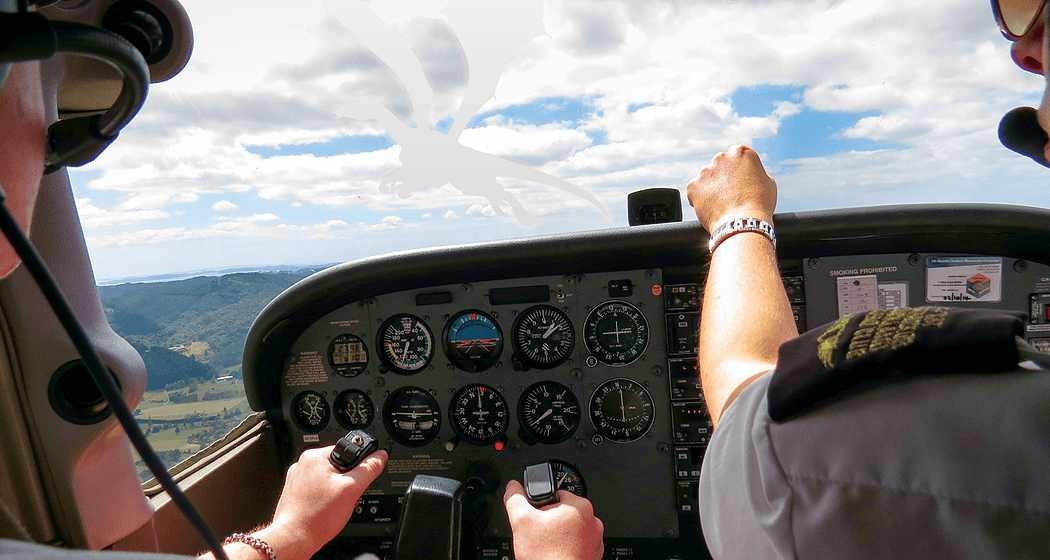
Below, we break down where pilot self-doubt comes from, when it’s actually useful, and the specific drills that build the kind of competence-backed confidence real safety depends on. The article that originally inspired this piece — Susan K. Parson’s “Defeating the Dragons of Doubt” in FAA Safety Briefing — said something we’ve come back to dozens of times since. Specifically, the antidote to doubt is not bravado. Instead, it’s mentorship and structured practice.
Why Pilot Self-Doubt Hits Hardest Right After Your Checkride
You spent months being graded on every move. Then suddenly, no examiner. No instructor in the right seat. Just you, the airplane, and the responsibility for everyone aboard.
That’s not a small adjustment. In fact, that’s a wholesale change in how you experience flying.
The Competence-Confidence Gap
Right after a checkride, your competence is at its peak. You drilled emergencies. You memorized callouts. Your scan was sharp because someone was watching it.
However, your confidence is calibrated to “passed the checkride,” not “actually fly safely without supervision.” In short, confidence lags competence. Specifically, that gap is where pilot self-doubt lives. The bigger the gap, the louder the doubt.
For most newly certificated pilots, the gap closes around the 75-100 hour mark of post-checkride flying. However, that assumes consistent flying. Skip a few weeks and the gap reopens fast. In fact, missing even three weeks after a checkride can re-open the gap to nearly its original size. That’s why we tell new pilots to fly something every two weeks during the first year — even a half-hour of pattern work counts.
Why a 200-Hour Pilot Often Flies Smarter Than a 1,000-Hour One
Here’s a counterintuitive truth veteran instructors will tell you: the most dangerous pilots aren’t the brand-new ones. They’re the 1,000-hour pilots who stopped feeling self-doubt years ago.
For example, a 200-hour pilot who still takes doubt seriously runs every preflight like it matters. They ask the FBO line guy about local quirks. They call flight service one more time before launch. In contrast, a complacent 1,000-hour pilot does none of that. The accident reports prove it. Specifically, NTSB data on GA fatal accidents consistently shows the 500-2,000 hour range as the most dangerous, not the post-checkride zone you’re currently terrified of.
We’ll be straight with you: a healthy dose of doubt is a feature, not a bug. The trick is knowing when it’s serving you and when it’s strangling you.
Healthy Caution vs. Confidence-Killing Doubt

Not all pilot self-doubt is created equal. One kind makes you a safer pilot. The other can ground you for good.
When Doubt Actually Saves Your Life
Healthy doubt sounds like this: “The ceilings are dropping faster than forecast — I’m not comfortable continuing.” Or this: “I haven’t done a soft-field landing in two months — let me grab an instructor before I try this strip.”
Notice what those have in common. The doubt is specific. It’s tied to a real condition. And it produces an action — divert, get a CFI, scrub the flight.
That’s pilot self-doubt operating as risk management. In fact, the FAA literally trains you to feel it via the IMSAFE checklist and the PAVE risk model. Specifically, IMSAFE asks you to interrogate your readiness across illness, medication, stress, alcohol, fatigue, and emotion. Furthermore, PAVE expands the same self-questioning to the pilot, the aircraft, the environment, and external pressures. Both checklists are doubt, structured.
When Doubt Becomes the Dragon
Unhealthy doubt sounds different. It says: “I shouldn’t be a pilot.” It says: “Everyone else gets this faster than me.” It says: “What if I forget everything mid-flight?”
However, that kind isn’t tied to any specific condition. It’s identity-level, not situation-level. And it doesn’t produce useful action. Instead, it produces avoidance, hesitation in the cockpit, and worst of all, a slow drift away from flying altogether.
If you’re flying less because the doubt is louder than the joy, you’re in dragon territory. That’s the fight this article is really about.
How a Mentor Pilot Defeats Pilot Self-Doubt Faster Than Solo Time Will
Susan K. Parson at FAA Safety Briefing has been writing about this for years. The single biggest accelerator for crushing pilot self-doubt isn’t more solo hours. It’s a mentor.
Specifically, solo time builds reps. However, mentor time builds judgment. You need both. But the mentor relationship is what closes the competence-confidence gap fastest. Furthermore, it’s the part most new pilots skip because nobody told them how to find one.
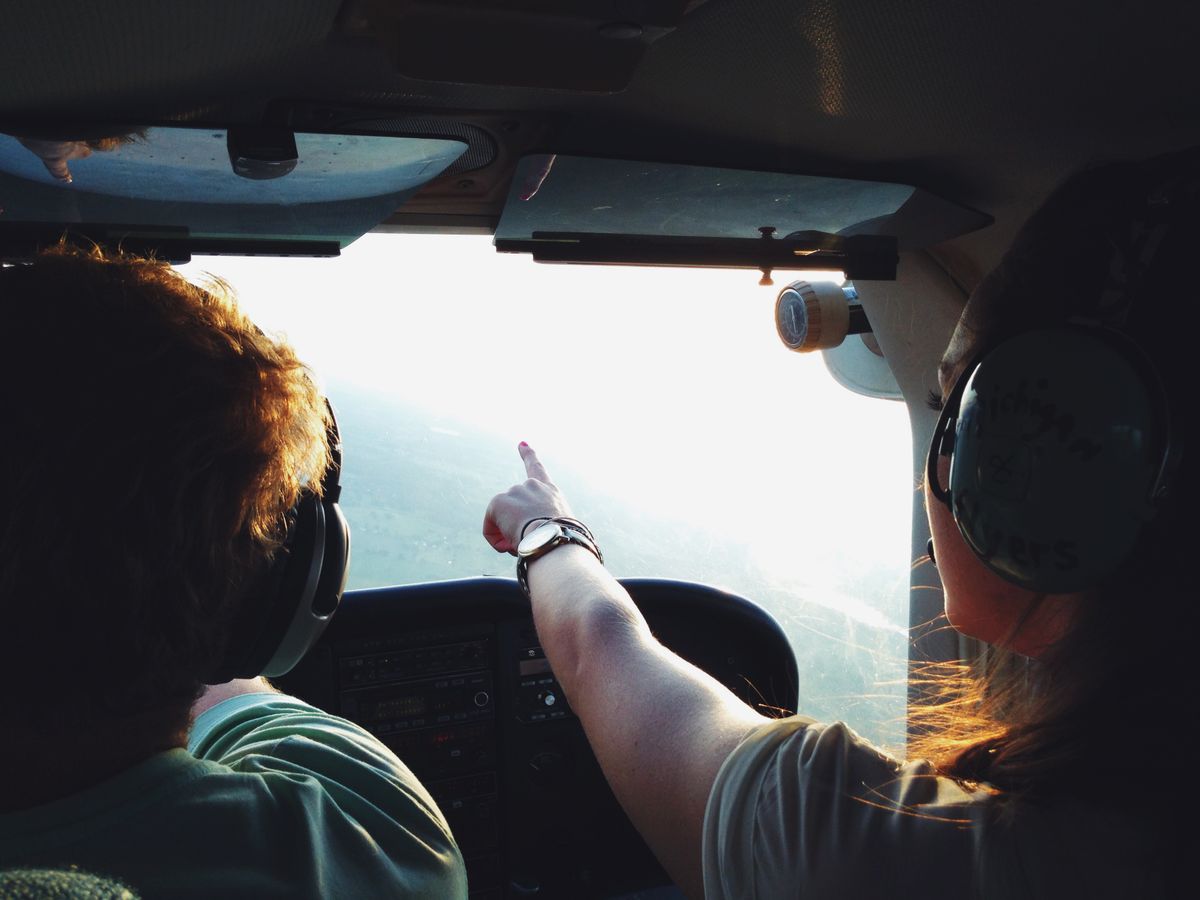
What a Real Mentor Actually Does for You
A good mentor isn’t a second flight instructor. They’re not grading you. Instead, they’re a more experienced pilot who shares the cockpit occasionally, debriefs your decisions in the FBO afterward, and tells you stories about their own dumbest mistakes.
That last part matters more than you’d think. For example, a 5,000-hour pilot might tell you about taking off with the cowl plugs in. Or busting Class B airspace because they fixated on a checklist. Suddenly, you realize that pilot self-doubt isn’t a sign you’re unfit to fly. In fact, it’s part of every honest pilot’s career — and the pilots who hide it are usually the ones who get hurt.
How to Find a Mentor Without Being Weird About It
Most newly certificated pilots overthink this. You don’t need a formal mentorship program. Instead, you need to:
- Hang out at your home airport on weekends, not just the days you fly
- Volunteer to ride right seat on someone’s IFR practice flight
- Join a local pilot association chapter (or fly-in breakfast circuit) and shut up and listen
- Ask one specific question instead of “will you mentor me”
The pilots you want to learn from will sniff out genuine curiosity in about three minutes. Then they’ll start volunteering knowledge. That’s the mentorship — it just won’t have a label on it. Notably, the best mentor relationships in GA are almost always informal. You bring coffee. They tell stories. You ask follow-up questions. Over six months you accumulate more practical judgment than you’d get from a year of solo flying.
Five Practical Drills That Beat Pilot Self-Doubt
Knowledge alone won’t kill the dragon. Reps will. Below are five drills you can start this week — no instructor required for most of them — that will measurably reduce your pilot self-doubt within 30 days.
1. Chair-Fly Your Next Flight — Every Time
Sit in your living room recliner. Run the entire flight in your head: taxi, runup, departure, en route, descent, approach, landing, shutdown. Touch invisible knobs. Read invisible checklists. Speak the radio calls aloud.
Sounds dumb. Works incredibly well. In fact, Olympic athletes have done this for decades. The cognitive science backs it up — mental rehearsal activates many of the same neural pathways as physical practice. For a new pilot, ten minutes of focused chair-flying the night before a flight is worth more than reading another chapter of the AIM.
2. Run the “What Would I Do” Loop Constantly
Every time you fly — and even when you don’t — pick a phase of flight and ask: “If the engine quit right now, what would I do?” Then pick a different phase tomorrow. Then a different airport. Then a different weather scenario.
In 90 days, you’ll have rehearsed responses to maybe 200 emergencies you’ll never face. However, the muscle memory will be there for the one you do face. Notably, the engine-out scenarios are the ones every pilot should drill weekly. They happen rarely, and when they happen, you have seconds to react with no time to think.
3. Debrief Honestly — Especially the Flights That Went Fine
Most pilots only debrief the bad flights. That’s exactly backwards. Pilot self-doubt feeds on unexamined experience.
Specifically, after every flight, write three things down: one thing you did well, one thing you’d change, one thing that surprised you. Three sentences. That’s it. Do it for 30 flights and you’ll see patterns about yourself you couldn’t have seen otherwise. For example, patterns about which kinds of weather you read well. Or which radio environments you struggle in. Or which kinds of approaches you nail and which you fudge.
4. Schedule One Currency Flight a Month — No Excuses
Block a recurring date. Treat it like a doctor’s appointment. The pilots who suffer most from doubt are almost always the ones who fly in clusters — five hours in March, then nothing until July.
Honestly, this is where we’d push back on the FAA’s currency rules. Three takeoffs and landings every 90 days is a legal minimum, not a competence minimum. In our view, real currency is monthly, not quarterly. Furthermore, the difference shows up the first time you have to handle a crosswind landing you haven’t practiced in two months.
5. Get a Flight Review Every 12 Months — Not Every 24
Same logic. The biennial flight review is a floor, not a ceiling. Furthermore, pilots who do an annual review with a CFI they trust report dramatically less anxiety than those who push it to month 23. For more on staying sharp between reviews, see our guide on building real proficiency vs. legal currency.
Five Myths About Pilot Self-Doubt That Make It Worse
The advice new pilots get about doubt is often worse than no advice at all. Below are the five myths we hear most often at fly-ins and FBOs — and what’s actually true.
Myth 1: “Real Pilots Don’t Feel This Way”
Wrong. Every honest pilot we’ve ever met has felt sustained pilot self-doubt at some point in their career. Even airline captains. Even check airmen. The difference isn’t that they don’t feel it. Instead, the difference is that they’ve learned what to do with it. Specifically, they treat doubt as data, not as a verdict on whether they belong in the cockpit.
Myth 2: “More Hours Will Fix It”
Partially true, but mostly misleading. Hours alone don’t fix doubt — quality hours do. In fact, 100 hours of routine pattern work in calm weather will do less for your confidence than 30 hours of varied flying with a mentor riding right seat. Furthermore, hours flown without honest debriefing can actually reinforce bad habits and increase the doubt long-term. Your brain knows something is off but can’t pinpoint what.
Myth 3: “If You Doubt Yourself, You Shouldn’t Be Flying”
Dangerous nonsense. By that logic, almost no pilot in history would have qualified to fly. Healthy pilot self-doubt is what produces go/no-go decisions, weather diversions, and humble cockpit communication. Notably, the pilots who never doubt themselves are the ones who fly into thunderstorms and run tanks dry.
Myth 4: “Just Push Through It”
This one is dressed up as toughness, but it’s actually how pilots get hurt. Pushing through doubt without addressing what’s causing it doesn’t build confidence. Instead, it builds suppression. And suppressed doubt has a habit of becoming hesitation at exactly the wrong moment. For example, the pilot who powered through a marginal-weather decision once will be slower, not faster, the next time the same call needs making.
Myth 5: “Talking About It Makes You Look Weak”
Honestly, the opposite is true. The pilots who talk about their doubt openly — to their CFI, their mentor, their hangar friends — are the ones who close the loop fastest. The pilots who hide it carry it for years. We’ve watched both happen up close, and the difference is striking. Specifically, the talkers tend to fly more, fly better, and stick with aviation long-term. The hiders tend to drop off after 200-300 hours, often blaming “life getting busy” when the real reason is that they never resolved the doubt.
When Pilot Self-Doubt Crosses Into a Safety Problem
Most pilot self-doubt is normal. However, some of it isn’t.
Warning Signs You’re in Trouble
If any of these are true, the doubt has stopped being useful and started being a hazard:
- You’re flying significantly less than you’d like to, and the reason is “I just don’t feel ready”
- You’ve started avoiding specific airports, conditions, or maneuvers you used to handle fine
- You’re hiding hesitation from your right-seat passenger or instructor
- You’re snapping at decisions on flights because you’re afraid of looking unsure
- You feel relief, not disappointment, when weather forces a cancellation
That last one is the big tell. When cancellation feels good, the doubt has overwhelmed the love of flying.
Our take: there’s no shame in pausing your flying for a season to address it. However, there’s a lot of shame in continuing to fly while pretending the dragon isn’t there. Pilots who get killed via continued-VFR-into-IMC, controlled flight into terrain, or stall-spin accidents almost always had warning signs of severe pilot self-doubt before the accident. Specifically, the a leading GA safety organization has published this accident data for years. The pattern is depressingly consistent. Pilots who were already uncomfortable, already rusty, already pressured by external factors — and who pressed on anyway because they didn’t want to look weak.
If you’re seeing the warning signs, talk to your CFI, your AME, or a trusted mentor. Not as an admission of failure. Instead, as an early intervention that keeps you flying for the next 30 years.
FAQ
How long does pilot self-doubt last after a checkride?
For most newly certificated pilots, it fades meaningfully around 75-100 hours of post-checkride flight time, assuming consistent flying. However, skip a few weeks and it returns fast. The honest answer is that some level of pilot self-doubt should always be present. It just shouldn’t be loud enough to ground you.
Is it normal to feel like a fraud right after passing my checkride?
Completely normal. In fact, almost every pilot experiences impostor syndrome after a checkride. The DPE signed off because you met the standard, not because you were supposed to feel like a god of the sky. Feeling shaky doesn’t mean you’re unqualified — it means you understand the responsibility.
Should I tell my CFI I’m struggling with self-doubt?
Yes, and the sooner the better. CFIs deal with pilot self-doubt constantly — it’s not new information to them. Specifically, a good CFI will redesign your next few flights around the maneuvers or situations that are eating at you, and the doubt will fade as the skills lock in.
Want more honest, no-fluff content for general aviation pilots? Visit aviation-articles or subscribe to the E3 Aviation YouTube channel for the kind of straight talk most aviation outlets won’t give you.