The single biggest accelerator for any new pilot’s career isn’t the airplane, the avionics, or the textbook. It’s an aviation mentor — a more experienced pilot who shares the cockpit occasionally, debriefs your flights honestly, and tells you the kind of stories no instructor will put on a syllabus.
However, most newly certificated pilots overlook this completely. Specifically, they think the path is: pass the checkride, fly solo, accumulate hours, get the next rating. That works. However, it works slowly, and it leaves you learning some lessons the hard way.
Honestly, an aviation mentor is the difference between a pilot who quietly drops out at 200 hours and one who flies for 30 years. We’ve watched both happen up close, and the difference is rarely talent. It’s the relationship.
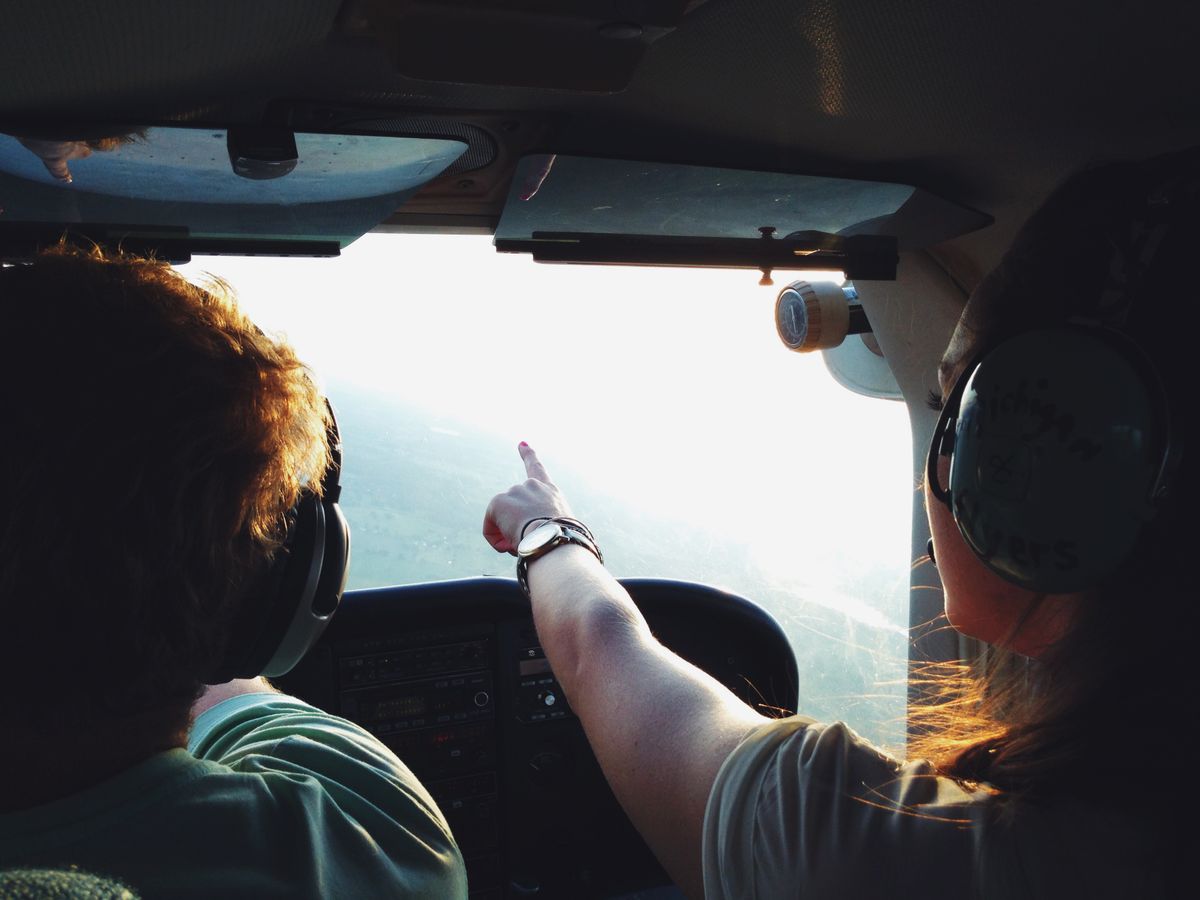
This guide covers what an aviation mentor actually is (and isn’t), the qualities to look for, where to find one, and how the relationship evolves over years. We’ll also cover red flags — because the wrong “mentor” can do more damage than no mentor at all.
Why an Aviation Mentor Matters More Than Another Rating
For instance, you can buy hours. You can buy ratings. You cannot buy judgment. That’s the gap mentorship fills.
Specifically, formal training teaches you what the FAA wants you to know to pass a checkride. Mentorship teaches you what experienced pilots actually do when the chart says one thing, the controller says another, and your fuel gauge says a third.
The Hidden Curriculum of General Aviation
Every airport has its own quirks. Every region has its own weather patterns. Every aircraft type has personality traits that no POH bothers to mention. In fact, most of what keeps experienced pilots alive isn’t in any handbook — it’s the accumulated tribal knowledge passed pilot to pilot at the FBO coffee pot.
An aviation mentor gives you direct access to that hidden curriculum. Without one, you’ll either pick it up over decades of trial and error or you’ll never pick it up at all and quietly stop flying when something scares you badly enough.
Why Role Models Matter — Even Historical Ones
Raymonde de Laroche became the first licensed female pilot in the world in 1910. She survived multiple horrific crashes during her flying career. Despite the constant setbacks, she kept flying — and her resilience inspired generations of pilots who came after her.
She wasn’t your aviation mentor. However, she’s worth knowing about because role models do something different from mentors. A mentor coaches you in real time. A role model shows you what’s possible — and gives you permission to keep going when you want to quit.
Every pilot needs both. Mentors are local and personal. Role models can be historical, distant, or even fictional. The point is the same: you can’t see what a 5,000-hour version of yourself looks like until somebody shows you.
What an Aviation Mentor Actually Does (And Doesn’t Do)

However, the word “mentor” gets thrown around loosely. In aviation, it has a specific meaning that’s worth pinning down.
An Aviation Mentor Is Not Your Flight Instructor
Specifically, a flight instructor is paid to teach you to a standard. Furthermore, they have a syllabus. They sign your logbook. They are responsible for your training outcomes.
An aviation mentor is none of those things. They’re not paid. They have no syllabus. They don’t sign anything. Instead, they share the cockpit occasionally, talk through your decisions afterward, and tell you stories about their own dumbest mistakes.
That last part matters more than you’d think. When a 5,000-hour pilot tells you about the time they took off with the cowl plugs in, or busted Class B because they fixated on a checklist, you instantly realize that even great pilots make boneheaded mistakes. Suddenly, your own occasional errors stop feeling like proof you don’t belong in aviation.
What a Real Aviation Mentor Does
Ultimately, boil it down and a real mentor does five things:
- Rides right seat occasionally and watches without grading
- Debriefs your decisions honestly afterward — not the maneuvers, the decisions
- Shares their own war stories so you learn from them, not from your own crashes
- Introduces you to other pilots who can teach you things they can’t
- Tells you when you’re being an idiot, kindly but directly
Furthermore, notice what’s not on that list. They don’t fly the airplane for you. They don’t tell you what to do in real time. They don’t take responsibility for your outcomes. The relationship only works if you remain pilot in command of your own development.
The Qualities of a Great Aviation Mentor
However, not every experienced pilot makes a good mentor. Some are excellent stick-and-rudder pilots but terrible teachers. Others love to talk but never actually flew very much. Below are the qualities that separate genuinely useful mentors from the ones who’ll waste your time.
1. Currency, Not Just Total Time
A 10,000-hour pilot who hasn’t flown in three years is less useful as a mentor than a 1,500-hour pilot who flies weekly. Notably, currency keeps a mentor’s instincts sharp and their advice relevant. Specifically, regulations, equipment, airspace rules, and best practices all evolve — a mentor who’s been out of the cockpit for years may be teaching you how things were done in 2015.
2. Diverse Experience
The best mentors have flown different aircraft, in different conditions, in different parts of the country. For example, a mentor who’s only flown high-wing trainers in the Midwest can’t help you much when you’re transitioning to a turbocharged complex aircraft and trying to figure out mountain flying. Ultimately, diverse experience produces flexible judgment.
3. Willingness to Be Wrong in Front of You
Notably, this is the rarest quality and the most important one. A mentor who pretends they’ve never made mistakes is useless to you. Specifically, the whole point of mentorship is learning from the mistakes the mentor already made — and that requires the mentor being willing to say “I was an idiot that day, here’s what I learned.”
If a candidate mentor only tells stories where they were the hero, find someone else.
4. Patience With Stupid Questions
Indeed, you will ask questions that make you feel dumb. You should. The best mentors answer those questions without sighing, rolling eyes, or making you feel like you should already know. In fact, the questions that feel dumbest are usually the most important ones — they reveal the gaps in your mental model that nobody else can see.
5. Honesty Over Niceness
Essentially, a mentor who tells you everything you do is great is a friend, not a mentor. The relationship works only if your mentor will tell you, honestly, when you screwed up — and explain how to do it differently next time. Indeed, niceness without honesty is worse than no mentor at all because it lets you keep making the same mistake.
Where to Find an Aviation Mentor

Honestly, most newly certificated pilots overthink this. Specifically, you don’t need a formal mentorship program. You don’t need to ask anyone “will you be my mentor.” You need to put yourself in places where experienced pilots hang out, and let the relationship form naturally.
Hang Out at Your Home Airport on Weekends
Specifically, not just the days you fly. The days you don’t. First, hang out in the FBO. Then drink the bad coffee. Next, watch the airport operate. Notice who’s there every weekend — those are the regulars, and the regulars are usually the ones with the most local knowledge to share.
Furthermore, weekend mornings are when the most pilot conversations happen. Show up. Listen. Ask one specific question when something comes up that interests you.
Volunteer to Ride Right Seat
For example, pilots flying IFR practice approaches, currency flights, or just out for a Saturday breakfast run will almost always welcome a quiet right-seater. You learn enormous amounts watching another pilot fly, especially one who’s better than you. Even better, the conversations during cruise and on the ramp afterward are where the real teaching happens.
Join a Local Pilot Association Chapter
Notably, one of the largest pilot associations has chapters in nearly every region. Specifically, members range from student pilots to retired ATPs. The monthly meetings, the project nights, the fly-in breakfasts — all of these are mentorship factories. Show up consistently for six months and you’ll have three or four informal mentors without ever asking.
Ask One Specific Question Instead of “Will You Mentor Me”
In contrast, nobody says yes to “will you be my mentor.” Everybody says yes to “I’m trying to figure out how to read the weather around the Cascades — would you have 20 minutes sometime to look at a flight I’m planning?” The pilots you want to learn from will sniff out genuine curiosity in three minutes and start volunteering knowledge from there.
How an Aviation Mentor Relationship Evolves Over Time
Specifically, real mentorship isn’t a one-time conversation. It’s a relationship that changes as you change.
The First Six Months: Listening Mostly
First, in the early phase, you’re mostly absorbing. Specifically, you’ll fly with your mentor a few times. Then you’ll listen to a lot of stories. You’ll ask questions and accept answers without arguing.
However, resist the temptation to demonstrate what you know. The whole point is to find out what you don’t know — and that requires shutting up and listening more than talking.
Year One to Two: Bringing Your Own Decisions
Then, as you build confidence, you start bringing your own flight planning, your own go/no-go calls, your own diversions to the conversation. Specifically, the mentor’s role shifts from teaching to coaching — they’re no longer telling you the answer, they’re asking you questions that reveal whether your reasoning holds up.
In fact, this is the most valuable phase. You’re starting to think like a pilot, and a good mentor is sharpening that thinking in real time.
Year Three and Beyond: The Relationship Becomes Mutual
Finally, by the time you’re a few years in, you have your own flying experiences, your own aircraft, your own strange situations to share. In fact, the mentorship becomes less one-directional. You’re contributing to the conversation, not just absorbing.
However, some mentor relationships end here as you outgrow them. Others continue for decades and become genuine friendships. Either is fine. The point was never to keep the relationship going — it was to learn from it while it was useful.
Red Flags: When a Mentor Is Doing More Harm Than Good
In fact, bad mentorship is worse than no mentorship at all because it teaches you confidently wrong things. Below are the warning signs.
They Brag Constantly About Risky Flying
Specifically, if your mentor’s stories are always about scud-running, busting minimums, or flying with squawks, they’re not teaching you how to be safe. Instead, they’re teaching you that those things are normal. In fact, they’re not — and the FAA accident database is full of pilots who learned that the hard way.
They Belittle You for Asking Questions
Notably, a good mentor wants you to ask. A bad one acts like every question is an inconvenience. If you’re afraid to ask your mentor something, they’re not your mentor anymore — they’re a roadblock.
They Push You to Fly Beyond Your Comfort Zone Aggressively
For example, stretching your comfort zone is part of growth. However, a mentor who repeatedly pushes you into situations you’re not ready for is gambling with your life. There’s a difference between “let’s go practice crosswind landings on a windier day than usual” and “you can handle this 18-knot direct crosswind in a 172, just try it.”
They Take Over the Controls Without Asking
Furthermore, if you’re flying with a mentor and they reach for the controls without verbal handoff, the relationship is broken. Specifically, you are pilot in command. Furthermore, they are a passenger or right-seater. The moment that line blurs, the mentorship is doing damage to your decision-making.
Mentor vs. Flight Instructor: Why the Distinction Matters in Practice
The line between flight instructor and aviation mentor sounds academic — but the practical implications are real. Confusing the two is the most common reason mentor relationships go sideways.
The Authority Problem
Specifically, when you fly with a CFI, the CFI is technically pilot in command (unless you’re already certificated and they’re acting as a passenger). They have authority. They can take the controls. They can grade you.
However, when you fly with a mentor, you are pilot in command. Notably, the mentor has no authority over the airplane and no authority over you. Specifically, that changes how the conversation works. First, you make every decision. Then you face every consequence. Ultimately, the mentor offers perspective — they don’t take responsibility.
The Money Problem
For example, you pay your CFI. Specifically, that payment creates a service relationship. You’re the customer. They have to deliver value, or you walk.
However, you don’t pay your mentor. Instead, there’s no service relationship. Specifically, they give you their time because they want to, not because you bought it. Notably, that changes the dynamics significantly. First, you can’t demand. Then you have to ask. And you have to bring something back to the relationship — gratitude, a coffee at the FBO, eventually mentoring someone else yourself.
The Honesty Problem
In fact, paid CFIs sometimes soften feedback because they’re worried about losing a customer. Notably, mentors don’t have that incentive. A good mentor will tell you exactly what they think, because there’s nothing at stake for them financially. That brutal honesty is one of the main reasons mentorship works — but it requires you to handle direct feedback without getting defensive.
The Long-Term Problem
Furthermore, your CFI relationship typically ends when you pass a checkride. The mentor relationship can last decades. Specifically, CFIs train you to a standard. In contrast, mentors train you to a self — the kind of pilot you want to become over a 30-year career. Ultimately, both matter. They’re just different timeframes.
FAQ
How is an aviation mentor different from a flight instructor?
A flight instructor is paid to teach you to a checkride standard, signs your logbook, and is responsible for your training outcomes. An aviation mentor is unpaid, has no syllabus, doesn’t sign anything, and is responsible only for sharing experience and asking good questions. Most pilots need both — but they serve different functions, and confusing the two leads to disappointment on both sides.
What if I don’t know any experienced pilots?
You will, within six months, if you start showing up at your home airport on weekends, joining a local pilot association chapter, and volunteering to ride right seat on other people’s flights. Aviation is one of the smallest, most welcoming communities you’ll find anywhere — but you have to put yourself in it. Mentors don’t appear by accident.
How long should I expect a mentor relationship to last?
The most useful phase is usually the first two to three years. After that, some relationships continue for decades and become friendships. Others naturally taper as you grow into your own. There’s no right answer — but the relationship served its purpose if you came out the other side a more capable, more humble, and more confident pilot.
Want more honest, no-fluff content for general aviation pilots? Visit aviation-articles or subscribe to the E3 Aviation YouTube channel for the kind of straight talk most aviation outlets won’t give you.