Loss of control prevention sits at the very top of every general aviation safety list — and the data tells you why. LOC accidents kill more GA pilots than any other cause, year after year. The FAA’s flight review guidance pinpoints exactly where most of these accidents happen, and the answer is closer to home than you’d think. Three traffic pattern scenarios cause most fatal stall/spin accidents in GA. Master them, and you’ve taken a real bite out of your personal risk profile.
Last Updated: May 8, 2026 · By: The E3 Aviation Editorial Team
Why Loss of Control Prevention Tops Every GA Safety List
LOC-I has been the number one cause of fatal GA accidents for over two decades. The numbers tell a story every pilot needs to hear.
From 2008 to 2014, Part 91 operators logged 1,425 accidents. Specifically, 17.4% involved loss of control inflight. Yet those accidents accounted for 48% of all fatalities during that period. In other words, LOC accidents are the deadliest accidents in GA.
Look — most of these aren’t happening at altitude in cruise. Instead, they’re happening close to the ground, in the traffic pattern, on a routine flight. In fact, 93% of accidental spins start at or below traffic pattern altitude. Notably, 41% of fatal LOC accidents end with a stall/spin.
That’s the part that should grab your attention. To be clear, routine pattern work — the flying you do every day — is where the killer scenarios live. But the data also points the way out.
Of course, the same NTSB data shows the inverse: pilots who train deliberately on these scenarios survive them. Therefore, the takeaway isn’t doom — it’s leverage. Yet most pilots never get the targeted training that would matter most.
Currency vs. Proficiency: Closing the Gap
Here’s the thing — currency and proficiency aren’t the same. Currency is legal. Proficiency is ready.
For example, you can be perfectly current under Part 61 and still be rusty enough that a tight pattern day catches you off guard. The FAA has hammered this point in every recent safety briefing. Indeed, most LOC accidents happen to pilots who weren’t proficient — not pilots who weren’t legal.
Importantly, loss of control prevention starts with closing that gap on yourself. Honestly. Before a tight pattern catches you doing it.
Yet most pilots conflate the two. Then they wonder why their last flight review felt easy and their next pattern day feels hard. To be clear, the FAA’s view is straightforward: legal currency is a floor, not a ceiling. Therefore, every pilot owes themselves more than the minimum.
What the FAA’s Flight Review Guidance Says
The FAA recently updated its flight review guidance — Advisory Circular 61-98D — to push pilots and instructors toward where the LOC risk actually lives. Notably, the AC doesn’t change Part 61.56’s regulatory minimums. But it does tell every CFI to spend their time on the scenarios most likely to kill their client.
Specifically, the AC singles out three traffic pattern scenarios as the highest-risk for loss of control inflight:
- Departure stalls
- Engine failure after takeoff (the “impossible turn”)
- The base-to-final turn
First, every flight review you take from now on should hit all three. Second, if your CFI doesn’t bring them up, you should.
Loss of Control Prevention in Your Next Flight Review
Bring real questions and real scenarios. To be clear, don’t just go up and do steep turns and a stall. Instead, ask your instructor to push you on the three killer scenarios at altitude — at a safe altitude first, then on a simulated low-altitude runway in the practice area. In fact, a good flight review is uncomfortable in places. That’s how you know it’s working.
Of course, every CFI runs reviews differently. Therefore, you have to advocate for the training you actually need. By comparison, a generic flight review costs the same as a focused one. Yet the focused review pays back many times over the next two years of flying.
Killer #1: The Departure Stall
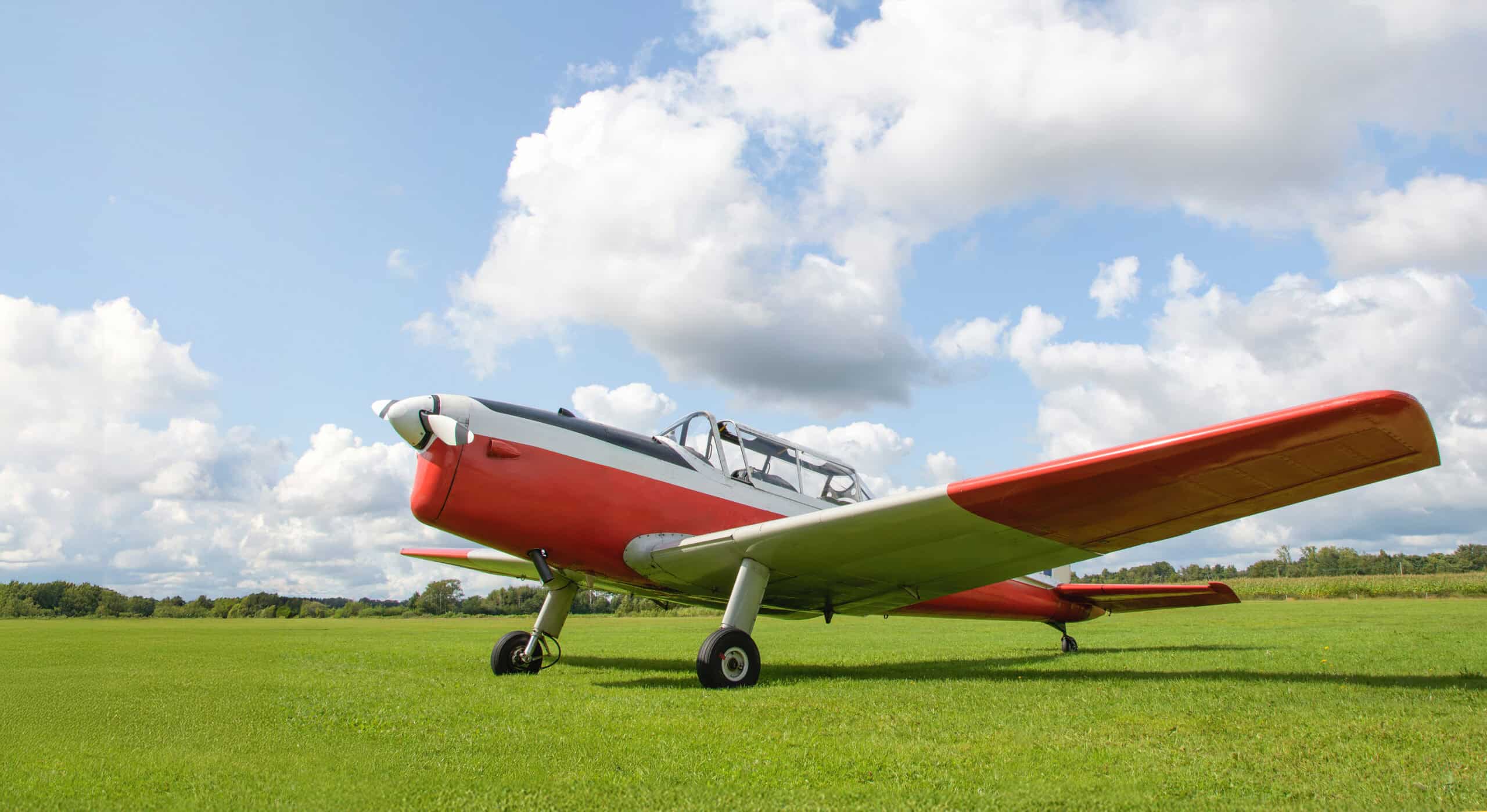
A departure stall happens when the airplane stalls during initial climb. High pitch attitude. High power setting. Low airspeed. The sight picture looks like the nose is climbing into nothing. Then the wing breaks.
For example, the mechanics are simple. The recovery is simple. Yet the trap is that you almost never practice it close to the way it really happens.
In real life, a departure stall comes after a botched climb-out. The pilot is distracted, glancing at a checklist, hand-flying through turbulence, or trying to clear obstacles with too much pitch. By the time the buffet hits, your reaction time is what saves you. Meanwhile, the ground is rising up under you with no margin to spare.
Of course, the practice version at altitude is forgiving. But the real version isn’t. Therefore, the only path to survival is making the recovery automatic. Then your hands move before your brain catches up.
Practicing Departure Stalls Safely
Practice at altitude — at least 3,000 feet AGL with no terrain underneath. Configure for takeoff. Apply full power. Pitch up aggressively. Hold the back pressure until the wing breaks.
Then push. Roll wings level if you’ve banked. Add full power. Lower the nose to the horizon and accelerate. Climb back out at Vy.
Repeat. Repeat. Repeat. Until the recovery feels automatic — because in real life you’ll get one chance.
Killer #2: Engine Failure After Takeoff — The Impossible Turn
The “impossible turn” is the 180° back to the field after an engine failure on takeoff. It’s killed more pilots than almost any other LOC scenario. Specifically, because it’s so tempting in the moment.
Here’s what most pilots get wrong. They think the question is “Can I make it back?” In contrast, the real question is “Should I try?”
For instance, at 200 feet AGL the answer is almost always no. At 500, sometimes. At 800, often. But there’s no universal number. Your airplane, your runway length, your wind, your terrain, your skill level — they all change the math.
Building a Pre-Takeoff Decision Plan
First, brief every takeoff. Out loud, in the cockpit, before you push the throttle in. Then pick a “decision altitude” specific to that runway and that airplane. Below it: land straight ahead, accept the bent metal, walk away. Above it: turn back — but only if you’ve practiced the turn at altitude and know the airplane’s actual performance.
The goal is to take the decision out of the panic moment. Indeed, you make the call when you’re calm. Then you execute when you’re not.
For example, a 172 at gross weight on a hot day climbs at maybe 600 feet per minute. Therefore, a 1,000-foot decision altitude buys you 100 seconds of options. Yet most pilots never run that math before pushing the throttle in.

Killer #3: The Base-to-Final Turn
The base-to-final turn kills more GA pilots than departure stalls and the impossible turn combined. Notably, it’s also the most preventable.
Here’s the trap. You overshoot final. The runway is on your right. Then you’re tempted to skid the airplane around — a little extra rudder, a little bottom rudder — to bring the nose back toward centerline without banking more.
That’s the kill chain. A skidding turn at low airspeed at low altitude. Specifically, the bottom wing — the inside wing — stalls first because of the load factor and the uncoordinated airflow. Then the airplane snap-rolls inverted. You’re 400 feet above the ground. You don’t recover. End of story.
Why the Skid Is the Killer
In a coordinated turn, both wings stall at roughly the same time. Predictable. Recoverable.
In contrast, in a skidding turn the bottom wing stalls first. Unpredictable. Catastrophically uncoordinated. The yaw flips you over the bottom wing into a fully developed spin in less than a second. Indeed, there’s no altitude to recover from that.
The fix is brutally simple. Keep the ball centered. If you’re overshooting, go around. Period.
The Stabilized Approach Solution
A stabilized approach is your single best LOC prevention tool. Specifically, set a personal gate at 500 feet AGL: airspeed, configuration, glidepath, and alignment all in the green. If any one of them isn’t, go around.
Going around is free. The go-around is normal. Real pilots go around all the time. By comparison, the pilots who never go around are the ones whose names show up in the NTSB database.
Likewise, your home airport is no excuse to skip the gate. In fact, more accidents happen at the home field than anywhere else, because that’s where complacency lives. Of course, you know your runway. Yet the wing doesn’t care how many times you’ve landed there before.
Loss of Control Prevention Drills You Can Run This Weekend
Want to make all this real? Here’s a weekend training block built around loss of control prevention. Take it to your CFI and ask them to walk you through each one at safe altitude.
Drill 1: Slow Flight Recognition
First, climb to a safe altitude with a long horizon. Configure for landing. Then slow to within 5 knots of stall. Make coordinated 30° turns left and right. Feel where the controls get sloppy. Feel where the buffet starts. To be clear, that’s the regime where pattern accidents happen — and most pilots haven’t visited it in months.
Drill 2: Departure Stall Series
At 3,000 feet AGL minimum. Takeoff configuration. Full power. Pitch up. Hold. Recover. Then repeat for 10 minutes until the recovery is reflex, not thought.
Drill 3: Skidded-Turn Recognition
This drill needs a CFI. Specifically, at altitude in landing configuration, set up a turn at pattern airspeed. Have your instructor walk you through what a coordinated turn feels like, then a skidded turn. Feel the seat shift. See the ball move. Indeed, recognize it before the wing tells you.
Drill 4: Pattern-to-Pattern Go-Arounds
Fly a pattern. Anywhere along it, your instructor calls “go-around.” Then react in under three seconds. Power up, pitch up, configure, climb. Repeat until it’s muscle memory.
Drill 5: Climbing Turn Stall
Here’s a forgotten one. Climb at Vy in a coordinated 30° bank. Then progressively pitch up while holding the bank. Feel the pre-stall buffet arrive earlier than it does in level flight. Notably, this is exactly the regime that catches pilots after a tight turn off the runway. Of course, the recovery is the same: push, level, accelerate. Yet the entry sneaks up faster than most pilots expect.
How the WINGS Program Reinforces Loss of Control Prevention
The FAA’s WINGS Pilot Proficiency Program is the structured framework for loss of control prevention training. Specifically, each phase requires 6 credits — 3 knowledge and 3 flight. Notably, many CFIs will sign off a WINGS phase completion in lieu of a flight review under FAR 61.56(e).
For instance, WINGS courses cover the full LOC curriculum: stabilized approaches, stall awareness, weather decision-making, runway incursions, and CFIT prevention. In fact, pilots who participate in WINGS show measurably lower accident rates than pilots who only meet the minimum flight review requirement.
It’s free. It’s online. There’s no excuse.
By comparison, sitting in your hangar reading the AC won’t move the needle. Yet pilots do it every year and call it training. To be clear, training is what happens when you’re tired, sweating, and uncomfortable. Therefore, treat the WINGS modules as fuel for your next flight, not an end in themselves.
What to Tell Your CFI Before Your Next Flight Review
Walk in with a specific ask. Tell your instructor: “I want this flight review to focus on loss of control prevention. Specifically, I want to drill departure stalls, the impossible turn decision, and base-to-final coordinated turns. Push me on the scenarios I’m most likely to die in.”
A good CFI will love that ask. In fact, a great CFI will redesign the whole review around it.
If your CFI shrugs and says “we’ll just do the regular checklist,” find a new CFI. Our take: a flight review built around the FAA’s three killer scenarios is worth twice what a generic review costs. To be clear, you’re paying for your own life insurance.
How Long Does a Real Loss of Control Prevention Flight Review Take?
Most flight reviews come in around 2 hours total — one hour ground, one hour flight. By comparison, a loss of control prevention focused review usually runs 3 hours. Specifically, expect 90 minutes ground reviewing the FAA’s three traffic pattern scenarios and AC 61-98D guidance, plus 90 minutes of flight time hitting departure stalls, the impossible turn, and base-to-final coordinated turns at safe altitude.
Yet the time investment is the wrong metric. In fact, a 3-hour review is roughly the cost of a single dinner out for two. By comparison, the airplane behind you costs $100,000+. Therefore, training to the level of the asset you’re flying isn’t optional — it’s the price of admission.
Frequently Asked Questions
How often should I practice stall recovery?
At a minimum, every six months. Loss of control prevention is a perishable skill. If you fly less than 50 hours a year, increase that to every three months. The first time you stall the airplane after a year off, your hands won’t be where you remember them being. Practice with a CFI at altitude to keep the skills fresh.
Can the WINGS program substitute for a flight review?
Yes. Completing any WINGS phase satisfies the flight review requirement under FAR 61.56(e). You still need to fly with a CFI to earn the flight credits, but the structure is built around proficiency rather than a one-and-done check. Most active GA pilots find WINGS more valuable than the standard biennial review.
What’s the safest way to practice the impossible turn?
Start at altitude. Pull the throttle to idle. Bank 45° toward your simulated runway. Note the altitude lost in 180°. Add 200 feet for a safety margin. That’s your real decision altitude — not the textbook number, your actual airplane on a hot day with you in the seat. Then build that number into your pre-takeoff brief.
Related Articles



Sources
- FAA Advisory Circular 61-98 — Currency Requirements and Guidance for the Flight Review and Instrument Proficiency Check
- FAA Safety Team — WINGS Pilot Proficiency Program
- NTSB General Aviation Accident Dashboard
- FAA Advisory Circular 61-67C — Stall and Spin Awareness Training
- Flying Magazine — FAA Releases Updated Circular on Flight Reviews and IPCs
Fly Smarter, Fly Longer
Loss of control prevention isn’t a one-day fix. Indeed, it’s a habit. To be clear, the pilots who keep flying — and keep walking away from their airplanes — are the ones who treat every flight review like the one that might save their life. For more pilot-focused safety and training content, watch our channel on YouTube and browse the latest articles on the E3 Aviation Articles page.