Experimental aircraft transition training is the bridge between certified-aircraft flying and the broader, less-regulated world of homebuilt and amateur-built aircraft. The transition is more than checking off an endorsement — it’s a meaningful shift in operational mindset, regulatory framework, and skill requirements. Pilots who treat the transition seriously fly experimental aircraft safely. Pilots who treat it casually account for an outsized share of the experimental accident rate.
This is a complete guide to experimental aircraft transition training for pilots considering the move. We’ll cover the regulatory framework, the insurance requirements, the training pathway, the most common failure modes, and how to evaluate whether you’re actually ready to operate an experimental airframe.
What “Experimental” Actually Means
The experimental category in the FAA regulations covers a wide range of aircraft, but for most owner-pilots the relevant subcategory is “amateur-built experimental” — aircraft constructed primarily for the builder’s education or recreation under FAR 21.191(g). This includes RVs, Lancair, Velocity, Glasair, and the hundreds of homebuilt designs flown across the country.
Experimental aircraft operate under different rules than certified aircraft. There’s no Type Certificate, no Production Certificate, and the aircraft’s airworthiness is established through the Experimental Airworthiness Certificate issued at the end of construction. The regulations governing operations are similar to certified aircraft in most respects, but there are meaningful differences in flight test phase requirements, operating limitations, and modifications.
For the transitioning pilot, the most important practical difference is that experimental aircraft aren’t certificated to the same testing standards. The flight characteristics, systems behavior, and edge-case performance haven’t been validated through Type Certification testing. The builder did the flight test phase, and the operating limitations were established based on that testing. The transitioning pilot inherits whatever was discovered (or missed) during that phase.
The Insurance Reality
Experimental aircraft insurance is a different market than certified aircraft insurance. Premiums are typically 20–40% higher than equivalent certified aircraft. Underwriters require specific transition training, often beyond what’s regulatorily required, and the insurance application asks detailed questions about pilot experience, transition training, and operational plans.
The dominant insurance carriers for experimental aircraft (AIG, USAIG, Old Republic, and a few specialty markets) all require documented transition training. The training requirements vary by aircraft type — high-performance experimental like Lancair IV-P or Velocity XL typically require more transition hours than slower designs like RV-7 or RV-12.
The typical underwriter requirement: 5–15 hours of dual instruction in the same make and model, with a qualified instructor, plus solo time documented before insurance becomes fully effective. New owners often face restrictions in the first 50–100 hours — no passengers, no IFR, no flight beyond a defined radius. The restrictions ease as the pilot accumulates hours in type.
Finding a Qualified Transition Instructor
The biggest single challenge in experimental transition training is finding a qualified instructor. Unlike certified aircraft, where instructors are commonly available, experimental instruction is concentrated in pockets — typically around active builder communities or near factories. Finding an instructor with specific experience in the make and model you’re transitioning to may require travel.
The Type Clubs are the best starting point. The Van’s Air Force community for RV aircraft, the Lancair Owners and Builders Organization for Lancair, and similar organizations for other types all maintain lists of qualified transition instructors. Most active builder communities also have informal networks of experienced pilots who provide transition training.
Quality matters more than convenience. An instructor with 1,000 hours in type and a documented track record of successful transitions is worth substantial travel and expense compared to an instructor with 50 hours in type who happens to be local. Insurance carriers and the safety statistics both reward thorough transition training; cutting corners on instructor selection compounds risk for years.
The Specific Skills Experimental Requires
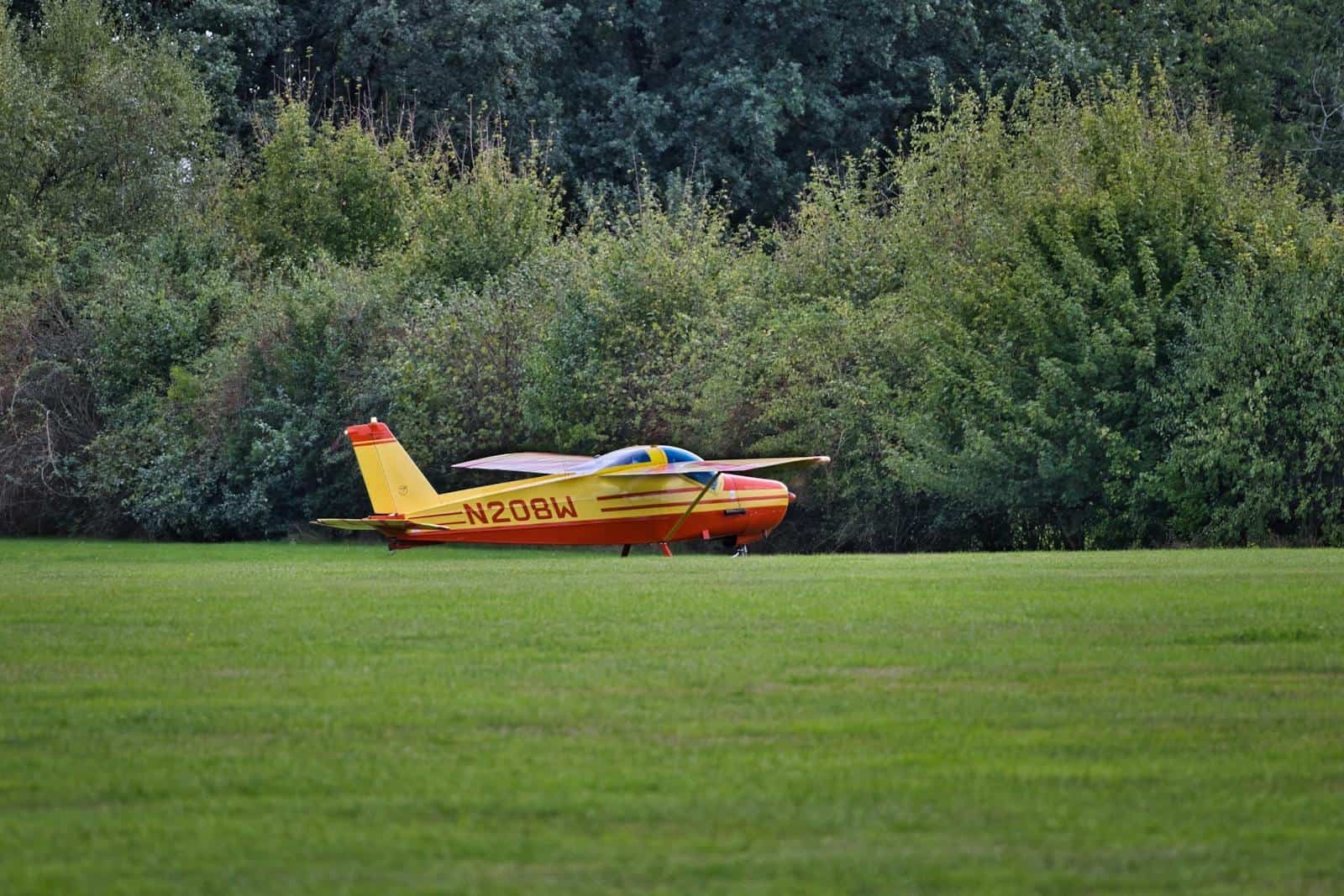
Experimental aircraft generally fly differently than certified aircraft, even when superficially similar. The control responsiveness, stall characteristics, slow-flight behavior, and engine handling can differ meaningfully from certified equivalents. The transition training has to address these specific differences for the specific airframe.
High-performance experimentals like Lancair IV-P, Velocity XL, or Glasair III have approach speeds and control behavior that pilots transitioning from Bonanzas or Cessna 210s find demanding. The aircraft don’t slow down well, the approach pictures look unfamiliar, and the energy management on short final is unforgiving. Pilots who skip the slow-flight portions of the transition often have hard landings — or worse — within the first 50 hours.
Lower-performance experimentals like RV-7, RV-9, or RV-12 have more conventional flight characteristics, but the controls are typically lighter and more responsive than certified equivalents. Pilots transitioning from older certified airframes (Cessna 172, Piper Cherokee) sometimes over-control during initial transition. The lighter feel takes 5–10 hours to internalize.
The Engine and Systems Knowledge Gap
Experimental aircraft often use engines that aren’t found in certified aircraft. Lycoming and Continental aviation engines are common, but so are auto-conversion engines (LS-based V8s, Rotax 912/914 in lighter airframes), and various turbocharged variants that aren’t certified anywhere. Each has specific operating procedures, monitoring requirements, and failure modes.
The transition training has to address the specific powerplant. Manifold pressure handling, mixture management, exhaust gas temperature monitoring, and oil temperature behavior all vary by engine. Pilots who arrive in the experimental cockpit with only Lycoming experience will find Rotax operations different in important ways, and vice versa.
Avionics and electrical systems also vary widely. Many experimental aircraft are equipped with experimental-grade avionics (Dynon, Garmin G3X, AFS) that have different interfaces and behaviors than certified glass cockpits. The transition training has to cover the specific equipment installed in the aircraft, not just the airframe handling.
The Flight Test Phase and What It Means
Every newly-built experimental aircraft goes through a flight test phase — typically 40 hours of solo operation by the builder within a defined geographic area before passengers can be carried. The transitioning buyer of a previously-flown experimental inherits the airframe with that flight test history. Understanding what was discovered (or missed) during that phase is operationally important.
Aircraft that completed flight test phase thoroughly — with documented airspeed calibration, stall characteristics, weight and balance verification, and systems testing — are dramatically safer than aircraft where the flight test phase was treated as a regulatory hurdle to clear. The buyer’s pre-purchase inspection should include a review of the flight test phase logbook and the operating limitations established at certification.
The transition training should include a thorough walk-through of the specific aircraft’s flight test history. Anomalies discovered during testing, modifications made after initial certification, and any operating limitations specific to this aircraft all matter. Pilots who skip this step often discover the airframe’s quirks the hard way.
Common Failure Modes During Transition

The experimental aircraft accident data shows clear patterns. The highest-risk windows are the first 25 hours in type (transition rust), and the 200–500 hour range (when overconfidence sets in). Pilots who acknowledge both windows and modify their operations accordingly have dramatically lower accident rates.
Specific failure modes that show up disproportionately: hard landings during the first 10 hours, loss of control on takeoff in lighter airframes, in-flight engine failures during the 50–100 hour break-in period (especially on newer builds), and CFIT (controlled flight into terrain) during night or marginal weather operations.
The mitigations are straightforward but require discipline. Limit the operational envelope during the first 50 hours. No night flying, no IFR, no flights beyond home airport patterns. Build hours in the aircraft slowly, in good weather, until the airframe is genuinely familiar. The pilots who do this consistently transition safely. The pilots who don’t are the ones in the accident reports.
The Type Clubs and Community Resources
The experimental aircraft community has built support structures that often exceed what’s available for certified aircraft. Type clubs like Van’s Air Force (for RVs), the Lancair Owners and Builders Organization, established vintage aircraft associations, and similar groups offer technical support, transition instructor referrals, parts sourcing, and member-to-member problem-solving that’s hard to match elsewhere.
For new experimental aircraft owners, the type club is often more valuable than any single document or course. Active members have hundreds of hours in the specific airframe, have encountered the quirks and edge cases, and can answer practical questions that aren’t in any manual. Joining the type club before purchasing is one of the highest-leverage moves a transitioning pilot can make.
The annual fly-ins and forums (Sun ‘n Fun, AirVenture, regional gatherings) are where the experimental community meets in person. The educational content at these events covers transition training, ownership topics, and modifications. For pilots considering experimental aircraft, attending one of these gatherings before making a purchase decision provides exposure to multiple types, experienced owners, and the community’s culture.
Modifications and Future Upgrades
One of the distinguishing characteristics of experimental aircraft is the latitude for modifications. Where certified aircraft modifications require STC or field approval processes, experimental aircraft can be modified by the builder or owner under the experimental airworthiness certificate. This flexibility is both an advantage and a responsibility.
New owners should approach modifications carefully. The aircraft’s flight test phase established its operating limitations; modifications can invalidate those limitations and require re-testing. Major modifications (engine changes, propeller changes, significant aerodynamic alterations) typically trigger a return to flight test phase under FAA notification requirements.
For pilots considering an experimental aircraft, evaluating the modification history is part of due diligence. An aircraft with a long history of well-documented modifications by competent builders may be lower-risk than an undocumented airframe. Aircraft with poorly-documented modifications, multiple builders, or unclear configuration history should be approached with significant skepticism.
The Long-Term Economics of Experimental Ownership
Beyond the upfront purchase and transition training, experimental aircraft ownership has different long-term economics than certified aircraft. The maintenance cost structure is generally lower — owners can perform their own maintenance under the experimental airworthiness certificate, parts are often available from non-aviation sources, and modifications can be made without STC processes.
The flip side is variability. Some experimental airframes have well-developed parts networks (the RV community is the prime example). Others have parts availability that depends on a small group of suppliers or even individual builders. Researching the parts and support ecosystem for the specific airframe is essential before purchase.
Long-term resale also depends on the airframe’s documentation and condition. Well-documented airframes from quality builders, with complete logbooks and clear modification history, command premium prices. Poorly-documented airframes can be difficult to insure and difficult to sell, even at meaningful discounts.
Evaluating Your Own Readiness
The honest self-evaluation is the hardest part. Pilots considering experimental transition often overestimate their preparedness. The questions to ask honestly: How current am I in similar performance aircraft? Have I logged recent hours that involve actual stick-and-rudder skill, not just autopilot operation? Do I have access to a qualified instructor for transition? Am I willing to fly conservatively for the first 100 hours?
The pilots who succeed at experimental transition share a profile: experienced, current, humble about the differences, willing to invest in thorough transition training, and disciplined about operating within reduced envelopes during the early hours. The pilots who fail at it share an opposite profile: experienced enough to be confident, but disconnected from current stick-and-rudder skills, dismissive of the differences, and eager to fly the aircraft “normally” from the first hour.
Experimental aircraft offer extraordinary capability for the pilots who can operate them safely. The transition is worth doing well. The alternative — cutting corners on training and discovering the aircraft’s edges the hard way — accounts for too much of the experimental accident record. The community of experienced experimental pilots is willing to help; new pilots just have to be willing to do the work.
Frequently Asked Questions
Do I need a special license to fly an experimental aircraft?
No special license, but you need the same certificate that would be required to fly an equivalent certified aircraft (e.g., a private pilot certificate for most experimental singles, plus any necessary endorsements like tailwheel, high-performance, or complex). Insurance carriers and the FAA both require documented transition training for the specific make and model.
How much transition training do I need?
Typical insurance carrier requirements range from 5–15 hours of dual instruction in the same make and model, depending on aircraft performance and pilot experience. High-performance experimental like Lancair IV-P or Velocity XL typically require more transition hours than slower designs. Quality of training matters more than minimum hours.
Is experimental aircraft insurance more expensive?
Yes. Premiums typically run 20–40% higher than equivalent certified aircraft. Underwriters require documented transition training, may impose operational restrictions during the first 50–100 hours, and ask detailed questions about pilot experience and operational plans. The premium difference is the cost of the regulatory and testing differences inherent in experimental aircraft.
What are the most common experimental aircraft accidents?
Hard landings during the first 10 hours in type, loss of control on takeoff in lighter airframes, in-flight engine failures during break-in (newer builds), and CFIT during night or marginal weather. Most are prevented by disciplined transition training and conservative operations during the first 100 hours.
Related Reading
Pilot Training Landscape Shifts
How modern training has evolved across all certificate paths.
The Other Guy Syndrome
Why pilots believe accidents happen to other people.
Continuous Pilot Training for Safety
Why training never stops once you have the certificate.
Last Updated: May 14, 2026