Resilience in aviation is far more than a trendy term—”Training for the Unexpected: Building Resilience in Aviation” it’s a foundational skill that equips pilots to adapt and excel when faced with unpredictable challenges. While robustness allows pilots to manage known issues within defined limits, resilience is about thriving in scenarios where the unexpected takes center stage. For aviation professionals, this means being prepared to navigate sudden mechanical failures, extreme weather, or other crises that push beyond the scope of standard operating procedures. As the aviation industry grows increasingly complex—with advancing technology, shifting workforce dynamics, and rising operational demands—training for resilience has become a cornerstone of maintaining safety and performance. This article dives deep into what resilience means in aviation, why it’s indispensable today, how pilots can train for it, and what steps the industry and individuals can take to foster this critical capability.
What Is Resilience in Aviation?
Defining Resilience
Resilience in aviation is the ability to adapt effectively to unforeseen challenges that standard training and procedures don’t fully address. Unlike robustness, which focuses on handling predictable problems—like a single engine failure or a hydraulic malfunction—resilience shines in situations that demand improvisation and quick thinking. It’s about managing multi-system failures, navigating chaotic weather patterns, or responding to rare events that defy the checklist. Experts break resilience down into four interconnected components:
- Anticipating: Foreseeing potential issues before they escalate, such as recognizing early signs of weather deterioration.
- Monitoring: Continuously assessing the situation as it unfolds, like tracking system performance during a malfunction.
- Reacting: Taking decisive action under pressure, such as rerouting a flight path in response to sudden turbulence.
- Learning: Reflecting on experiences to improve future responses, such as adjusting strategies after a near-miss incident.
Real-Life Examples of Resilience, Training for the Unexpected: Building Resilience in Aviation | Aviation Resilience
To illustrate, consider the iconic 2009 “Miracle on the Hudson.” Captain Chesley “Sully” Sullenberger faced dual engine failure after a bird strike shortly after takeoff. With no power and limited time, he and First Officer Jeff Skiles relied on their training, intuition, and rapid decision-making to safely land US Airways Flight 1549 on the Hudson River, saving all 155 passengers and crew. This wasn’t just robustness—it was resilience, as they adapted to an unprecedented situation beyond standard protocols.
Another compelling case is Captain Terry Van Hoose, who encountered severe weather, instrumentation failures, and a lightning strike during a flight to Mexico. With systems failing and visibility near zero, he and his crew stayed calm, improvised solutions, and landed safely. These examples highlight how resilience bridges the gap when preparation alone isn’t enough.
Why It’s Distinct from Robustness
Robustness ensures a plane can withstand a known stress, like turbulence within design limits. Resilience, however, is the human factor—the pilot’s capacity to innovate when those limits are exceeded. It’s the difference between a system enduring a storm and a pilot navigating through it when instruments fail.
Why Resilience Matters in Modern Aviation

The Changing Landscape of Aviation
Aviation safety has improved dramatically over decades, thanks to advanced engineering, automation, and rigorous training. The International Air Transport Association (IATA) reported that the global accident rate in 2022 was just 1.21 per million flights—a testament to these advancements. Yet, as automation becomes more prevalent, new risks emerge. When automated systems fail—or encounter situations they weren’t programmed to handle—pilots must step in with creativity and confidence.
The Experience Gap
The industry also faces a significant workforce transition. Seasoned pilots, with decades of hands-on experience, are retiring in droves. The Federal Aviation Administration (FAA) estimates that over 50% of U.S. airline pilots will retire by 2030, replaced by younger aviators with less real-world exposure. Historically, resilience was honed through years of flying in varied conditions. Today’s newer pilots, often trained in highly controlled simulator environments, need deliberate resilience-building to fill this gap.
Statistics and Trends
Data underscores the need. A 2021 Boeing study found that human error remains a factor in 80% of aviation incidents, often tied to situations requiring adaptability beyond rote procedures. Meanwhile, climate change is increasing the frequency of severe weather events—up 30% since 1980, per the National Oceanic and Atmospheric Administration (NOAA)—adding unpredictability to flight operations. Resilience ensures pilots can handle these evolving challenges.
How to Train for Resilience

Training for resilience isn’t about memorizing more checklists—it’s about cultivating mental agility and practical skills to face the unknown. Here’s how it’s done, with detailed strategies and examples:
Recognition Primed Decision-Making (RPDM)
RPDM trains pilots to make fast, effective decisions by recognizing patterns from past experiences rather than overanalyzing options. Developed from studies of expert firefighters, RPDM is ideal for high-stakes aviation scenarios. For instance, if a pilot loses all navigation displays mid-flight, RPDM enables them to recall a similar simulator event, assess the situation, and act—say, by relying on manual controls and visual cues—without hesitation.
How to Practice: Pilots can review case studies (e.g., Sully’s landing) and simulate rapid-response drills, building a mental library of patterns. Training for the Unexpected: Building Resilience in Aviation | Aviation Resilience
Simulation and Scenario-Based Training
Simulators are invaluable, but resilience demands more than routine scenarios. Training should include rare, cascading failures—like simultaneous engine and electrical issues during a storm. A 2020 study by the European Union Aviation Safety Agency (EASA) found that pilots exposed to unpredictable simulator events improved adaptability by 35% compared to those in standard drills.
Example: A session might start with a hydraulic failure, then add a sudden wind shear, forcing pilots to prioritize and innovate.
Tools: Full-motion simulators with customizable scenarios, updated with real-world incident data.
Continuous Continuous Learning and Debriefing
Resilience grows through reflection. Post-flight debriefs—whether after a real mission or simulation—allow pilots to dissect what worked, what didn’t, and why. Airlines like Qantas have adopted structured debriefing protocols, linking them to a 20% reduction in repeat errors. Pilots should also study safety reports, such as those from the Aviation Safety Reporting System (ASRS), to learn from others’ experiences.
Actionable Tip: Keep a personal log of challenging flights, noting decisions and outcomes for future reference.
Stress Inoculation Training (SIT)
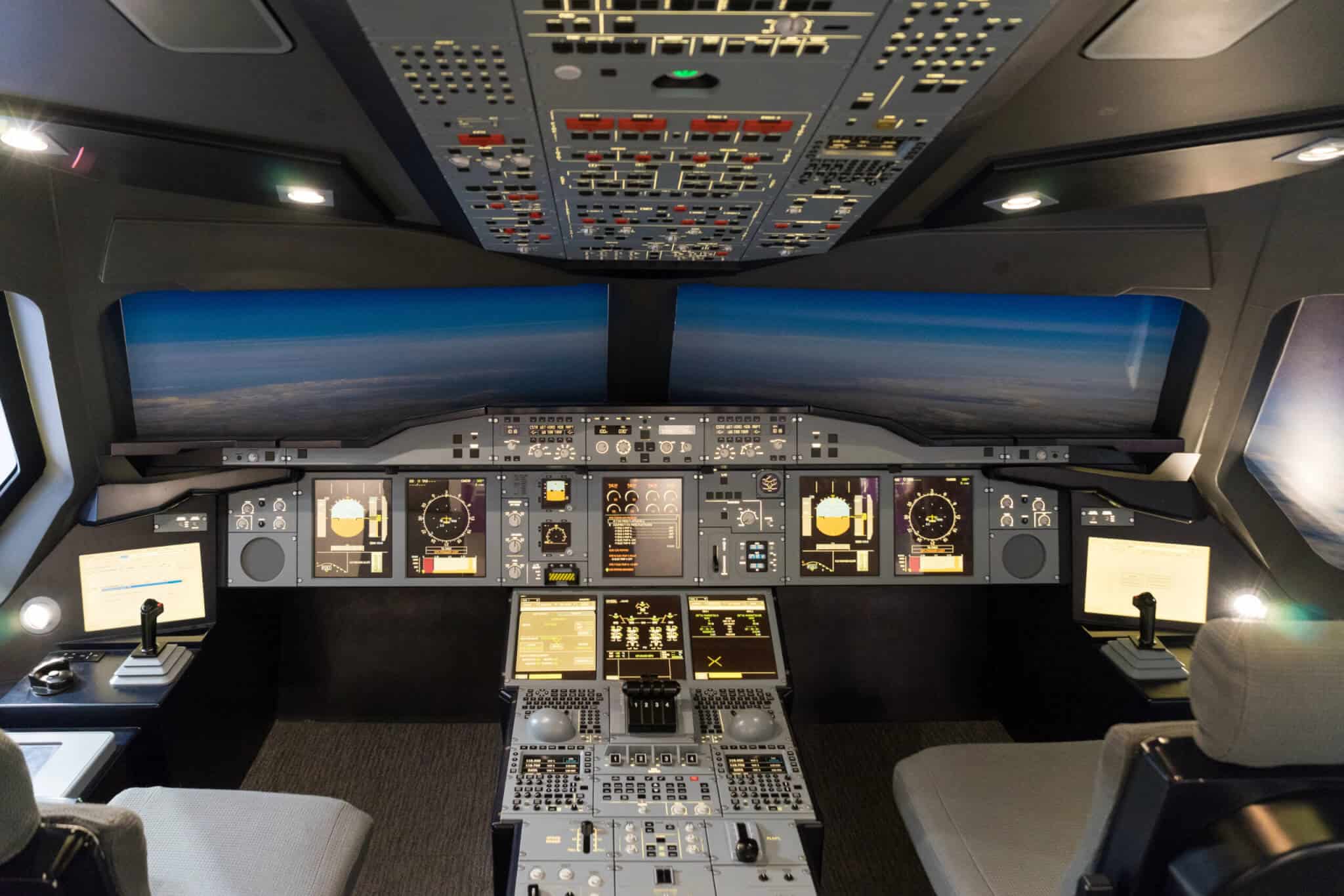 Borrowed from military psychology, SIT exposes pilots to controlled stress—e.g., time pressure or sensory overload—to build tolerance. A pilot might train in a simulator with loud alarms, flickering screens, and urgent ATC calls, learning to stay focused.
Benefit: Research from the U.S. Air Force shows SIT reduces panic responses by 40% in crisis simulations. Training for the Unexpected: Building Resilience in Aviation | Aviation Resilience
Balancing Automation and Human Skill
The Double-Edged Sword of Automation
Automation—like autopilots and flight management systems—has slashed workload and error rates. Yet, overreliance can erode manual skills. The 2009 Air France Flight 447 crash, where pilots struggled to recover from a stall after autopilot disengaged, underscores this risk. Training must include “automation-off” scenarios, ensuring pilots can fly manually when needed.
Example Drill: Fly a landing approach with no autopilot, no autothrottle, and partial instrument failure.
Keeping Skills Sharp
The FAA recommends pilots log manual flying time regularly. Airlines like Delta integrate “hand-flying days” into training, where crews practice without automation in simulators or low-risk flights.
Real-World Examples of Resilience
Captain Tammy Jo Shults and Southwest Flight 1380
In 2018, an engine explosion on Southwest Flight 1380 shattered a window, partially sucking a passenger out. Captain Tammy Jo Shults, a former Navy pilot, calmly executed an emergency descent and landing, saving 148 lives. Her resilience stemmed from experience, composure, and quick adaptation. Training for the Unexpected: Building Resilience in Aviation | Aviation Resilience
Qantas Flight 32
In 2010, Qantas Flight 32 suffered a catastrophic engine failure shortly after takeoff. Captain Richard de Crespigny and his crew managed over 50 system alerts, safely landing the Airbus A380 with 469 aboard. Their success relied on teamwork, improvisation, and resilience under pressure.
The Role of Technology in Resilience Training
Virtual Reality (VR) and Augmented Reality (AR)
VR immerses pilots in 360-degree crisis scenarios—like a cockpit fire—while AR overlays data (e.g., emergency checklists) onto real-world views. A 2022 MIT study found VR-trained pilots reacted 25% faster in simulations than peers using traditional methods.
Cost Benefit: VR setups are cheaper than full-motion simulators, broadening access.
Artificial Intelligence (AI)
AI can generate dynamic scenarios tailored to a pilot’s weaknesses, adjusting difficulty in real time. Companies like CAE are pioneering AI-driven training platforms.
The Role of Instructors and Culture
Instructor Impact
Instructors must model resilience, encouraging pilots to experiment and learn from mistakes. A supportive tone—e.g., “What did you learn?” vs. “Why did you fail?”—builds confidence.
Cultural Shift
Airlines should reward adaptability, not just compliance. Programs like United’s “Safety First” initiative, which encourages reporting near-misses without blame, foster a resilience-minded culture.
Overcoming Challenges in Resilience Training
Resource Constraints
High-fidelity simulators cost millions, and smaller operators struggle to afford them. VR and desktop simulators offer scalable alternatives. A 2023 Embry-Riddle study found desktop-based training improved decision-making by 15% at a fraction of the cost.
Mindset Shift
Moving from rigid adherence to flexible thinking challenges tradition. Leadership must champion this evolution, integrating resilience metrics into evaluations.
The Future of Resilience in Aviation
Emerging Trends
As drones and urban air mobility grow, resilience will extend beyond traditional pilots to remote operators. Automation will advance, but human oversight will remain key. By 2035, IATA predicts a need for 600,000 new pilots—many requiring resilience training from day one.
Proactive Steps
Airlines investing in resilience now—through technology, culture, and training—will lead in safety and reliability as complexity rises.
Takeaways and Next Steps
Resilience empowers pilots to turn chaos into control. Here’s how to build it:
- Simulate the Unpredictable: Seek out complex, multi-failure scenarios.
- Master Manual Skills: Practice flying without automation monthly.
- Learn Constantly: Review incidents, debrief thoroughly, and study trends.
- Leverage Tech: Explore VR or AI tools for immersive practice.
- Advocate for Culture: Push for training that values adaptability.
For deeper resources, visit www.e3aviationassociation.com or the FAA’s safety training portal.