On April 28, 2025, Newark Liberty International Airport faced a radar outage that lasted between 60 to 90 seconds, a brief but disruptive event that rippled through one of the busiest airspaces in the United States. Caused by a single burnt wire, this incident led to flight delays, cancellations, and a stark reminder of aviation’s reliance on fragile infrastructure. For pilots, it’s not just a news story—it’s a call to action. This article dives into the specifics of what happened, its immediate and lasting impacts, and equips pilots with the knowledge and strategies to navigate radar outages effectively.
What Happened: A Detailed Account of the Outage
The Outage Begins: A Sudden Loss of Control
On April 28, 2025, around midday, air traffic controllers at Philadelphia TRACON—the facility overseeing Newark’s airspace—lost all radar and radio communications in an instant. Screens went blank, headsets fell silent, and for an estimated 60 to 90 seconds, controllers had no way to track or communicate with aircraft. The culprit? A burnt wire in the TRACON’s aging system, which triggered a cascading failure of both the radar feed and voice network. Pilots in the air, expecting routine instructions, were suddenly cut off from ground support.
Pilots’ Perspective: Silence on the Frequency
In the cockpit, the outage hit like a wall of silence. Recordings reveal the confusion, with a United Airlines pilot repeatedly calling, “Newark Tower, United 123, radio check… do you read?”—each attempt met with nothing. For those 90 seconds, pilots in Newark’s congested airspace relied solely on their instruments and training. With dozens of flights likely airborne—some on approach, others departing or holding—the lack of ATC guidance forced them to lean on tools like Traffic Collision Avoidance Systems (TCAS) and visual checks to avoid conflicts.
Immediate Response: Ground Stop and Chaos
The FAA reacted quickly, issuing a ground stop for all Newark departures within minutes of the outage. Labeled a response to “telecommunications and equipment issues at Philadelphia TRACON,” this move kept more planes from entering the chaos. Airborne aircraft faced a tougher reality: once communication returned, arrivals were sent into holding patterns or diverted to nearby airports like JFK or LaGuardia, while recent departures climbed to safe altitudes to wait. The National Air Traffic Controllers Association noted that for those 60 to 90 seconds, the facility “lost the ability to monitor or guide aircraft”—a rare and perilous situation.
The Aftermath Unfolds: Delays and Disruption
When systems rebooted after roughly 90 seconds, the brief blackout had already unraveled Newark’s operations. As a United Airlines hub and a critical airspace node, the disruption snowballed:
- Flight Disruptions: Grounded departures waited as ATC stabilized the system, while arrivals stacked up in delays.
- Backlog Creation: Taxiways clogged, gates filled, and passengers grew frustrated with limited updates.
- Controller Strain: The shock left some controllers rattled, with several taking medical leave, worsening staffing woes.
By day’s end, flights were grounded or circling far beyond schedule, with recovery stretching into days. Delays averaged four hours, and cancellations spiked from 4 daily in early April to 39 post-incident, per Cirium data.
Scope of the Incident: A Snapshot
- Duration: 60–90 seconds of blackout, with longer-lasting delays.
- Aircraft Affected: An estimated 20–30 planes were under TRACON control during the outage.
- Operational Impact: A major hub thrown off-kilter, affecting thousands of passengers.
What Made It Unique
Unlike typical outages, this event knocked out both radar and radio simultaneously. Normally, controllers can fall back on one system if the other fails, but here, a single wire’s failure stripped away all ground awareness, leaving pilots isolated. It was a stark lesson in system vulnerability.
Educational Guidance for Pilots: How to Handle Radar Outages
Understanding Radar Outages
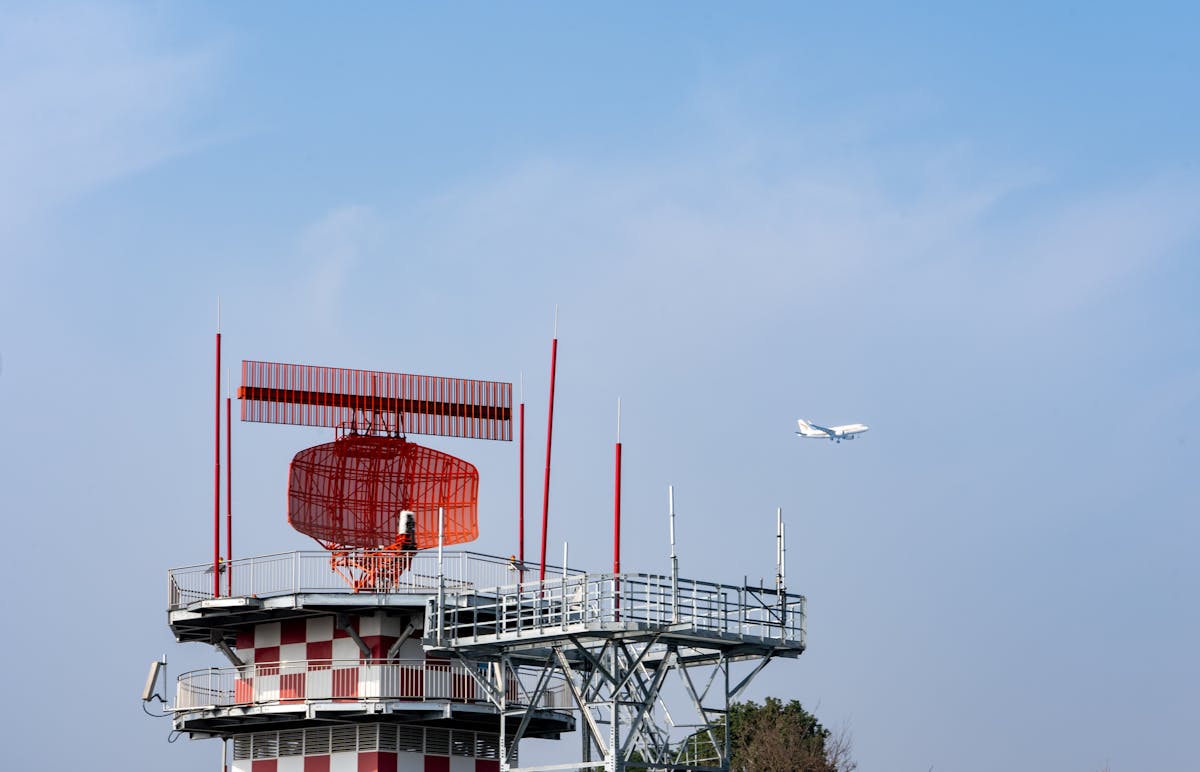
A radar outage means ATC can’t track aircraft positions, often due to equipment failures like the burnt wire at Newark. When paired with a radio blackout, as seen here, controllers lose both sight and voice, thrusting pilots into a self-reliant role. Knowing this dynamic is the first step to managing it.
Pilot Procedures During Radar Outages
When ATC goes dark, your training kicks in. Here’s how to handle it:
- Maintain Situational Awareness
Use every tool—GPS, TCAS, visual scanning—to monitor your position and nearby traffic. In dense airspace like Newark’s, this is your lifeline. - Follow Last Clearance
Stick to your last ATC instruction (heading, altitude, route) unless safety demands a change, like dodging weather or traffic. - Attempt Communication
Cycle through channels—primary radio, backups, transponder signals, even a cell phone if viable. If ATC’s silent, try relaying via other aircraft or facilities. - Use Standard Lost Communication Procedures
No response? Set your transponder to 7600, signaling radio failure, and follow your flight plan or lost comms protocols (e.g., hold last altitude or climb to a safe minimum). - Prepare for Delays
Anticipate holds, diversions, or ground stops. Adjust fuel plans and brief passengers when feasible. - Stay Calm and Professional
Panic muddies decisions. Stay composed, and when comms return, keep exchanges clear and brief.
These steps keep you in command and airspace safe, even without ATC.
Lessons from Newark
The outage highlights key takeaways:
- Infrastructure Fragility: One wire’s failure caused mayhem—expect the unexpected anywhere.
- Communication Breakdowns: Dual losses demand mastery of lost comms procedures and backups.
- Operational Ripple Effects: Delays hit hard; pilots ease the strain by staying proactive and communicative.
- Mental Resilience: Isolation tests your nerve—build toughness to thrive under pressure.
Preparing for Future Incidents
Stay ahead with these strategies:
- Regular Training
Simulate radar and comms failures in training to sharpen reflexes. - Review Procedures
Brush up on lost comms protocols pre-flight, especially for busy hubs, and memorize your plan. - Stay Informed
Track infrastructure issues—aging systems hint at risk zones. - Leverage Technology
Master onboard tools (GPS, TCAS, ADS-B) and their limits. - Build Mental Stamina
Practice stress techniques—breathing, checklists—to stay focused.
Preparation turns chaos into control.
Conclusion
The Newark Airport radar outage of April 28, 2025, exposed cracks in aviation’s foundation but also showcased pilots’ critical role in safety. By understanding what happened and honing your skills, you can face such disruptions with confidence. As the industry shores up its systems, your readiness remains the ultimate safeguard.
What Actually Happened at Newark
Specifically, the Newark Liberty International Airport radar outage refers to the May 2025 event where the ATC system serving Newark Class B airspace experienced a 90-second loss of radar and radio communications. Critically, controllers at the Philadelphia TRACON (which handles Newark approach control) lost the ability to see and communicate with aircraft for that period.
Honestly, the 90-second window doesn’t sound long until you consider that approach controllers were sequencing aircraft into Newark — the third-busiest airport in the New York region — and that aircraft were in mid-approach when controllers went dark. Pilots executed lost-comms procedures, controllers used backup systems, but the operational stress was real.
Operational Impact
For instance, the immediate impact included ground stops, diversion of inbound flights, and substantial delays cascading through the Northeast corridor. Specifically:
- Commercial airlines diverted dozens of Newark-bound flights to Philadelphia, JFK, and LaGuardia
- GA aircraft transiting the New York Class B faced delays and rerouting
- The FAA opened a formal investigation into ATC system resilience
- Controller staffing at Philadelphia TRACON came under scrutiny — overtime had been routine for months
Notably, the outage reignited debate about FAA modernization, ATC privatization, and infrastructure investment that has been simmering for a decade.
ATC Resilience Lessons
Practically, the Newark event highlighted infrastructure vulnerabilities that exist across the U.S. ATC system. Specifically:
- Many facilities run on aging hardware that wasn’t designed for current traffic volumes
- Backup systems exist but aren’t always exercised regularly
- Controller staffing across the country runs at 80-85% of authorized levels, with overtime routine
- Software modernization programs have repeatedly slipped on schedule
Critically, the Newark outage wasn’t unique — similar incidents have occurred at other major facilities. The pattern reflects systemic underinvestment more than isolated equipment failure.
What GA Pilots Can Take Away
Above all, GA pilots flying near major hubs should understand that ATC service is human and equipment dependent — and both can fail. Specifically:
- Know lost-communications procedures cold for IFR operations
- Have an alternate plan if approach control becomes unavailable
- File flight plans even for VFR cross-countries through complex airspace
- Carry current paper or backup electronic charts
- Don’t assume ATC will always be there — they usually are, but plan for the rare exception
Our take: the Newark outage was a reminder that the air traffic system depends on infrastructure that doesn’t always work as intended. Treating ATC as a resource, not a service, makes you a more resilient pilot.
Frequently Asked Questions
How long did the Newark radar outage last?
The May 2025 Newark radar and communications outage lasted approximately 90 seconds. While short in duration, the impact cascaded through the busy Northeast corridor for hours, with diversions and delays affecting dozens of flights and exposing infrastructure resilience gaps.
What caused the Newark radar outage?
The outage was attributed to equipment failure at the Philadelphia TRACON facility handling Newark approach control. Specific root cause analysis identified aging infrastructure, with the FAA committing to accelerated modernization at the affected facility. The broader pattern reflects systemic ATC infrastructure underinvestment, not isolated equipment failure.
How does an ATC radar outage affect GA pilots?
For VFR GA pilots not in radar contact, the impact is minimal — you continue see-and-avoid operations as normal. For IFR pilots in the affected airspace, the impact can be significant: hold patterns, diversions, lost-comms procedures, and delayed clearances. The Newark event reminded GA pilots that flying in complex airspace requires understanding what happens when ATC service degrades.
What FAA Modernization Looks Like
For instance, the FAA’s modernization roadmap addresses several of the infrastructure gaps the Newark outage exposed. Specifically, the NextGen ATC program includes radar replacement, voice communication modernization, automation tools to reduce controller workload, and integration with satellite-based surveillance. Critically, NextGen has been in progress for two decades with mixed results — some elements (ADS-B mandate) have delivered, others (data communications between aircraft and ATC) have lagged.
Honestly, the pace of modernization frustrates everyone involved. Controllers want better tools, pilots want better systems, the FAA wants resources to deliver, and Congress wants results. The Newark event added pressure to accelerate, but the institutional realities of large-scale federal infrastructure programs limit how fast change can happen.
How GA Pilots Should Respond
Practically, GA pilots can’t control ATC infrastructure resilience but can control their own preparation. Specifically:
- Stay current on lost-comms procedures. Practice the AVEF and AVEN scenarios during flight reviews.
- Use backup electronic charts. Carry paper alternates for critical mission segments.
- File flight plans even for VFR. Active flight plans make you findable if something goes wrong.
- Know your alternates. Have go/no-go criteria written down and stick to them.
- Treat ATC service as a resource, not a service. The system usually works, but not always.
Our take: the Newark outage was a reminder that the air traffic system depends on infrastructure that doesn’t always work as intended. The pilots who treat ATC service as a robust-but-imperfect resource fly more resilient operations than those who assume it’ll always be there.
The Broader ATC Infrastructure Question
For instance, the Newark outage refocused attention on broader U.S. ATC infrastructure challenges. Specifically, the National Airspace System depends on facilities, equipment, software, and human controllers that all face their own challenges. Practically, addressing the underlying issues requires sustained investment, congressional support, and willingness to accept short-term disruption for long-term improvement.
Our take: aviation infrastructure questions don’t get the attention they deserve until something goes wrong. Newark was a wake-up call that the system supporting U.S. aviation operations needs the same kind of maintenance and modernization any complex infrastructure requires. Whether the response is proportionate to the underlying problem remains to be seen.
Practically, the broader implications of the Newark event extend beyond the immediate operational impact. Specifically, the incident catalyzed congressional hearings, accelerated FAA modernization budget allocations, and sparked industry-wide discussion of ATC infrastructure resilience that had been simmering for years. Outages like Newark’s tend to focus attention in ways that day-to-day operational realities don’t.
Honestly, GA pilots benefit from understanding these system-level dynamics. Specifically, the airspace you operate in depends on infrastructure investment decisions made years earlier. Following industry coverage of ATC modernization helps you understand what to expect in the airspace where you fly.
Practically, the Newark outage didn’t just affect commercial traffic. Specifically, GA pilots transiting the New York Class B faced delays, holds, and reroutings that cascaded for hours after the initial event. Owner-operators who file IFR through busy airspace shouldn’t treat ATC service as guaranteed — it usually is, but the rare exceptions can disrupt your entire flight plan.
Honestly, that’s the lesson worth carrying forward: the system works most of the time, but plan for the days when it doesn’t. The pilots who get caught flat-footed are the ones who assumed it would always be there.
The E3 Aviation Editorial Team writes for owner-pilots, student pilots, and the small aircraft community. We focus on practical, real-world content that respects your time and your training. Learn more about E3 Aviation.
Last Updated: 2026-06-01