Pilots flying near Palm Beach, Florida need to know one thing above all else: the Mar-a-Lago TFR is among the most actively enforced presidential TFRs in the United States. Since 2017, NORAD has scrambled military jets to intercept general aviation pilots who strayed into this restricted airspace. Often, those pilots had no idea they crossed a boundary. Understanding the Mar-a-Lago TFR structure, the real consequences of a violation, and the tools that keep you legal is not optional for anyone flying in South Florida. This guide covers everything you need to fly safely and stay compliant near Palm Beach.
Last Updated: May 4, 2026 | By: The E3 Aviation Editorial Team
What Is the Mar-a-Lago TFR? Airspace Structure Explained
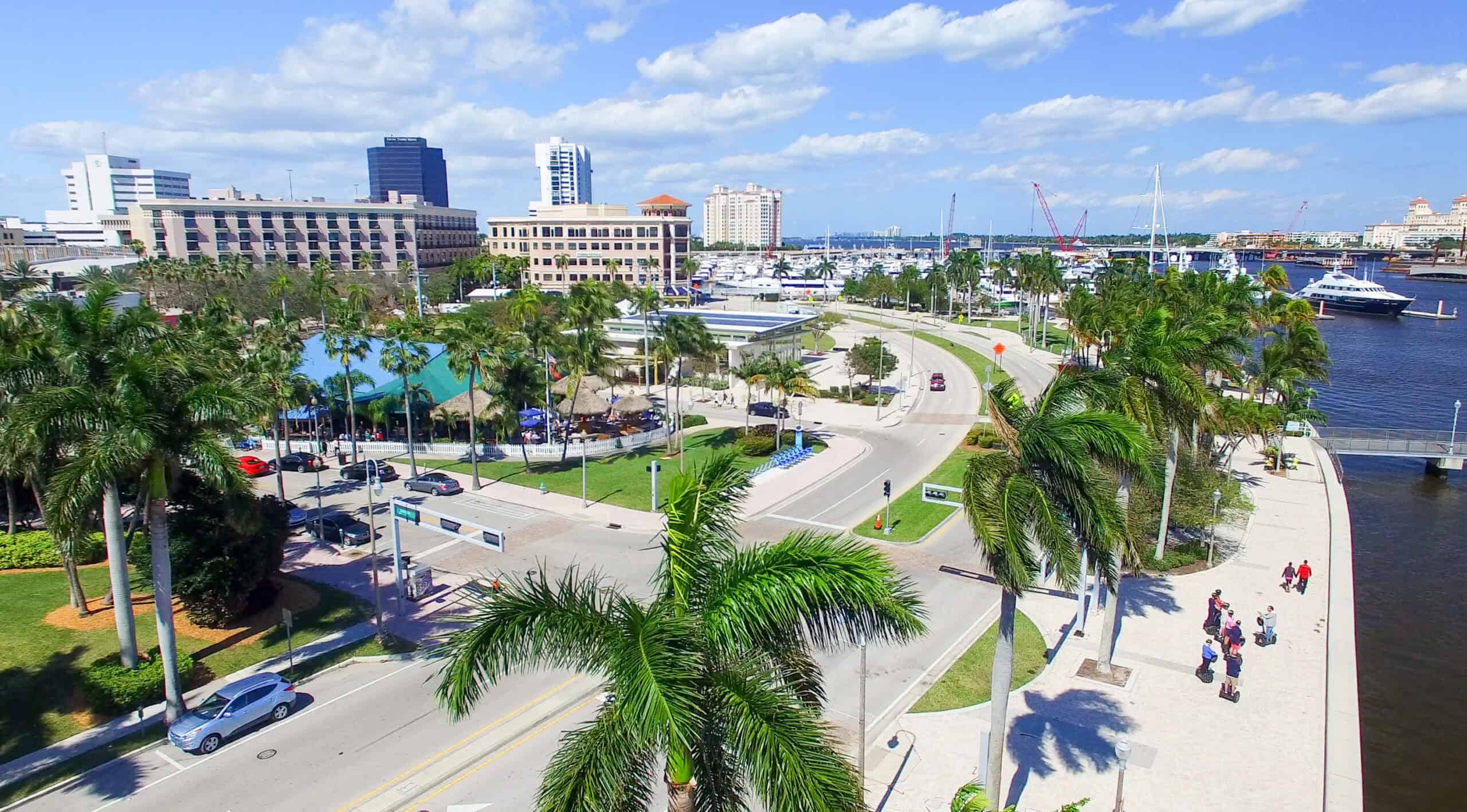
The Mar-a-Lago TFR activates whenever the President of the United States visits the Palm Beach estate. NORAD and the FAA coordinate its publication, and the restriction appears as a NOTAM — typically issued 48 hours or less before activation, often with little predictability in timing or duration.
The airspace has two distinct rings. First, the outer ring covers 30 nautical miles from the surface to FL180. VFR and IFR traffic may transit this outer ring — but only if pilots file a flight plan, squawk an ATC-assigned transponder code, and maintain two-way radio contact with ATC at all times. Failure to satisfy any single requirement constitutes a violation. Second, the inner ring covers 10 nautical miles and is a hard no-fly zone. No exceptions exist for any aircraft — commercial, private, or medical — once the inner core activates. Even if you are on a flight plan and squawking correctly, penetrating the 10-mile ring triggers an immediate military response.
Additionally, operators flying into Palm Beach International Airport (PBI) while the TFR is active must pre-register at one of five FAA-designated gateway airports: White Plains (HPN), Teterboro (TEB), Dulles (IAD), Orlando International (MCO), or Fort Lauderdale (FLL). Registration must occur no less than 24 hours before departure.
Why the Mar-a-Lago TFR Activates Without Warning
The FAA has specifically warned operators that Mar-a-Lago TFR activations are unpredictable in both frequency and duration. A weekend trip that looks clear on Thursday can run into a fully active TFR by Saturday morning. NORAD and Secret Service coordinate activation timing based on actual presidential movements — not public schedules. Consequently, that 48-hour advance notice is a maximum, not a guarantee. Pilots who plan South Florida flights should build TFR verification into their routine within 24 hours of every planned departure.
What Happens After a Mar-a-Lago TFR Violation
Breaching the Mar-a-Lago TFR puts an immediate chain of events in motion. NORAD monitors the airspace continuously using radar and ground-based systems. Consequently, intercepts happen fast — often within minutes of a boundary breach.
The Military Intercept Sequence

First, a military jet — typically an F-16 from Homestead Air Reserve Base — joins your aircraft on the left wing. The pilot rocks the wings to signal contact. Your immediate response should be: stay calm, switch to 121.5 MHz (the guard frequency), and follow all instructions. Specifically, the intercept pilot will signal you to follow, then escort you out of the restricted airspace.
Erratic movements during an intercept escalate the situation significantly. Additionally, landing at an uncontrolled airstrip does not guarantee escape. NORAD uses infrared tracking pods that can detect a hot engine from altitude. One well-documented incident near Mar-a-Lago resulted in law enforcement arriving at a remote fly-in community because a tracking pod spotted the aircraft after it landed.
Equally important: NORAD’s reach includes surface-level radar and coordination with local law enforcement. You cannot simply land and walk away. The system is designed to ensure accountability on the ground, not just in the air.
Ground Investigation Procedures
Once intercepted and escorted down, you land at a designated airport. The FAA, Secret Service, and sometimes the FBI meet you. Investigators review your flight plan, radio logs, and communication record. Furthermore, investigators increasingly cross-reference pilot social media activity for context on intent. Cooperation on the ground is critical — the agency distinguishes clearly between accidental incursions and deliberate ones. Your conduct during the investigation directly affects the outcome.
The Real Costs of a Presidential TFR Violation
Every Mar-a-Lago TFR violation carries consequences at multiple levels — personal, financial, and systemic. Understanding the full cost helps explain why enforcement is so aggressive.
Penalties for Pilots
The FAA’s civil penalty for a TFR violation starts at $1,414 per violation. Typically, the FAA charges pilots with both the TFR violation and careless or reckless operation under 14 CFR 91.13 — meaning two separate enforcement actions per incident. First-time violators with clean records sometimes receive a warning. However, repeat offenders face certificate suspension or revocation. Additionally, every military scramble costs taxpayers between $50,000 and $100,000. Frequent violations generate serious political pressure to restrict GA access to South Florida airspace on a permanent basis.
Impact on the Aviation Community
Beyond the individual pilot, every intercept near Mar-a-Lago erodes the GA community’s standing with policymakers. Furthermore, each incident reinforces a narrative that GA pilots are a security liability — a narrative that drives heavier restrictions across all presidential TFRs nationally. Violations in this area have contributed directly to discussions about expanding the restricted zone, installing permanent ground-based detection systems, and increasing mandatory accountability requirements for pilots throughout South Florida.
How to Check the Mar-a-Lago TFR Before Every Flight

The most effective protection against a Mar-a-Lago TFR violation is a disciplined, multi-source preflight routine. Relying on a single app or source is not enough for South Florida flying. Each tool below addresses a different failure point.
Primary Sources for TFR Information
First, check tfr.faa.gov before every South Florida flight — and again within 24 hours of departure. The FAA’s graphic TFR display shows active restrictions with visual overlays and NOTAM details. Second, call 1-800-WX-BRIEF (Flight Service) for a full standard briefing. Notably, a formal briefing from Flight Service creates a legal record that you checked for TFRs before departure. That record can matter significantly during an FAA investigation.
Third, use your EFB — ForeFlight, Garmin Pilot, or a similar app — but treat it as a supplement, not your primary source. Battery failures and connectivity gaps can create dangerous blind spots in TFR data. Above all, cross-check your EFB data against the official FAA NOTAMs database before every flight near Palm Beach.
Staying Current When You’re Near Palm Beach
Additionally, monitor ATIS frequencies and listen for ATC advisories while en route. Furthermore, download the NORAD General Aviation intercept procedures smart card and keep it in your flight bag. It outlines intercept signals in clear, pilot-friendly language — and knowing those signals before you need them makes a genuine difference in a stressful situation. Generally, any pilot flying within 50 miles of Palm Beach International on a regular basis should have these procedures memorized cold.
Flying Legal in the Palm Beach Area: Practical Strategies
Beyond thorough preflight checks, experienced South Florida pilots build specific habits that reduce Mar-a-Lago TFR risk on every flight.
Route Planning Around the TFR
When the Mar-a-Lago TFR is active, plan routes that remain entirely outside the 30-mile outer ring. Specifically, routing over the Everglades or offshore are both standard, well-established alternatives for GA traffic in the region. Moreover, filing an IFR flight plan — even on clear VFR days — significantly reduces your risk near Palm Beach. IFR pilots under ATC control stay in the communication loop automatically if a TFR activates or shifts mid-flight.
What to Do If You Realize You’ve Entered the TFR
If you enter the Mar-a-Lago TFR without clearance — through a misread chart, an outdated NOTAM assumption, or an equipment failure — act immediately. First, squawk 7700. Second, switch to 121.5 MHz and announce your position and your intention to exit. Third, turn toward the nearest open airspace and exit the TFR as directly as possible. Predictable, calm behavior is your strongest asset in an intercept scenario. For a deeper look at how violations escalate and how to handle them, read our full guide on why presidential TFR violations keep rising and how GA pilots stay safe.
Building a South Florida Preflight Habit

Finally, build a written South Florida-specific preflight checklist. Include every item: check tfr.faa.gov, call Flight Service for a full briefing, confirm EFB TFR data layer is active and current, identify two TFR-safe escape routes before departure, and review NORAD intercept procedures. Ultimately, the pilots who avoid violations are the ones who treat TFR compliance as a non-negotiable step — not an afterthought. For more strategies on building safe GA habits, explore our guide on avoiding TFR violations for general aviation pilots.
Frequently Asked Questions About the Mar-a-Lago TFR
How much notice do pilots get before the Mar-a-Lago TFR activates?
The FAA typically issues the NOTAM within 48 hours of activation — but timing varies widely. The FAA has specifically warned that Mar-a-Lago TFR activations are unpredictable in frequency and duration. Always verify at tfr.faa.gov within 24 hours of any planned South Florida departure.
Can I fly through the outer ring of the Mar-a-Lago TFR?
Yes, but only under strict conditions. You must file a flight plan, squawk an ATC-assigned transponder code, and maintain continuous two-way radio contact throughout transit. Failing any single requirement constitutes a violation. The inner 10-mile ring has no exceptions for any aircraft.
What should I do if I accidentally enter the Mar-a-Lago TFR?
Squawk 7700 immediately, switch to 121.5 MHz, announce your position, and exit the TFR via the most direct available route. Military jets may intercept you. Follow all intercept signals exactly and stay calm. After landing, expect an FAA investigation. Voluntary, cooperative disclosure and an immediate exit attempt both demonstrate good faith and typically result in less severe penalties.
What penalty will I face for a Mar-a-Lago TFR violation?
First-time violators with clean records may receive a warning. However, the FAA can impose civil penalties starting at $1,414 per violation — and typically charges both the TFR violation and careless or reckless operation as two separate enforcement actions. Repeat offenders face certificate suspension or revocation.
Does flying IFR protect me from the Mar-a-Lago TFR?
IFR flight under ATC control significantly reduces the risk of an inadvertent violation because ATC monitors your position and can issue warnings. However, it does not exempt you from TFR rules. You remain legally responsible for knowing the TFR exists and for remaining outside restricted airspace, regardless of your flight plan status.
Where can I find the official Mar-a-Lago TFR boundary?
The official, real-time TFR boundary publishes at tfr.faa.gov. Additionally, NORAD publishes pilot guidance at norad.mil/General-Aviation. Check both sources before any South Florida flight.
E3 Aviation Editorial Team
The E3 Aviation Association editorial team is made up of licensed pilots, aviation educators, and industry professionals dedicated to advancing general aviation safety, community, and education. Learn more about E3 Aviation.
Sources
- FAA TFR Website (tfr.faa.gov) — Official real-time source for all active Temporary Flight Restrictions.
- FAA NOTAMs — Official Notice to Air Missions database for pre-flight TFR verification.
- NORAD General Aviation — Intercept procedures, smart card downloads, and TFR compliance guidance for GA pilots.