The aircraft carrier flight deck is one of the most dangerous workplaces on Earth. Jets are launched and recovered in tight sequences, crewmembers in color-coded jerseys execute precise roles, and every single person knows their job — and does it exactly right, every time. There is no room for improvisation, ego, or shortcuts. Professionalism isn’t a suggestion on that deck. It’s survival.
Here’s what most GA pilots get wrong: they think professionalism is for airline crews and military aviators. That it doesn’t apply to the guy flying a Cessna 172 on weekend trips to visit family. That mindset is exactly where accidents begin.
Professionalism in general aviation isn’t about the airplane you fly or the ratings you hold. It’s about how you fly — the habits, the discipline, the standard you hold yourself to every single flight. This guide breaks down what it actually means to fly like a pro in the GA environment.
What Flight Professionalism Actually Means for GA Pilots
Professionalism in aviation has nothing to do with whether you get paid. It’s a mindset — a set of behaviors, habits, and standards that you apply consistently, regardless of whether anyone is watching.
For GA pilots, flight professionalism comes down to five core behaviors. First, you follow checklists — not from memory, but from the printed or digital checklist, every time. Second, you brief every flight, even the short ones. Third, you make go/no-go decisions based on standards, not mood. Fourth, you communicate clearly and correctly on the radio. Fifth, you debrief honestly after every flight, including the ones that went fine.
None of these are complicated. All of them are skipped regularly by pilots who think they know better.
Why Good Habits Beat Raw Skill Every Time
Skill fades. Currency lapses. Weather gets worse than the briefing said. In those moments, what saves you isn’t talent — it’s habit. Professionalism is about building habits so reliable that they hold even when stress, fatigue, or distraction tries to override them.
Consequently, the most experienced GA pilots are often the most disciplined — not the most creative or the most willing to improvise. They’ve seen what improvisation produces. They’ve watched what happens when pilots skip the checklist “just this once” or push into weather they aren’t current for.
The Checklist: Your Most Underused Tool

Ask most GA pilots what a checklist is for and they’ll say it’s to make sure you don’t forget anything. That’s true — but it’s only half the answer.
The deeper purpose of a checklist is to make your flying independent of your memory. Memory is unreliable under stress, fatigue, or distraction. A checklist doesn’t get tired. It doesn’t get distracted by a passenger asking questions or a radio call at the wrong moment. It just tells you what to do, in the right order, every time.
Do-Verify vs. Read-Do: Know the Difference
There are two checklist philosophies. Do-verify means you complete items from memory, then use the checklist to verify you got them right. Read-do means you read each item, then perform it. Airlines and military operations use read-do for critical phases. Most GA pilots use do-verify as a matter of habit.
Neither approach is inherently wrong — but both require discipline. The dangerous middle ground is using the checklist as theater: running through it quickly without actually verifying anything. Specifically, watch yourself on the run-up checklist. That’s where sloppy habits hide.
Abnormal and Emergency Checklists
Knowing your emergency procedures cold is part of professionalism. However, knowing them cold doesn’t mean you skip the checklist in an actual emergency. It means you use the checklist to confirm you haven’t missed a step under pressure.
Practice your abnormal procedures in the sim or with a safety pilot regularly. Additionally, brief yourself on the most likely emergency for the phase of flight you’re in before every departure. What will you do if the engine quits on the runway? Just after rotation? At pattern altitude? Professionalism means having an answer before you need one.
Flight Briefing: The Five-Minute Habit That Changes Everything
Professional pilots brief every flight. Not just the long cross-countries — every flight. A thorough briefing takes five minutes. Skipping it takes zero minutes and costs you situational awareness for the entire flight.
A proper pre-flight briefing covers six areas. First, weather — not just the destination, but the route, the alternates, and the trends. Second, NOTAMs — runway closures, TFR activations, and navaid outages. Third, fuel — how much you have, how much you need, and what your reserve looks like at the destination. Fourth, aircraft status — any open write-ups, recent maintenance, or squawks you know about. Fifth, passenger brief — emergency exits, seat belts, sterile cockpit expectations. Sixth, contingencies — what’s your plan if the destination goes below minimums, the engine starts running rough, or the radio fails?
The Sterile Cockpit Rule
Airlines mandate a sterile cockpit below 10,000 feet — no non-essential conversation during critical phases of flight. For GA pilots, the equivalent is simple: during taxi, takeoff, approach, and landing, your attention belongs to the airplane. Passengers can wait.
This is especially important when flying with non-pilot passengers who don’t understand the workload involved. Brief them before you start the engine. Tell them you’ll be busy during certain phases and that you’ll signal when it’s okay to talk. Most passengers respect this immediately once it’s explained.
Personal Minimums: The Decision You Make Before You Fly
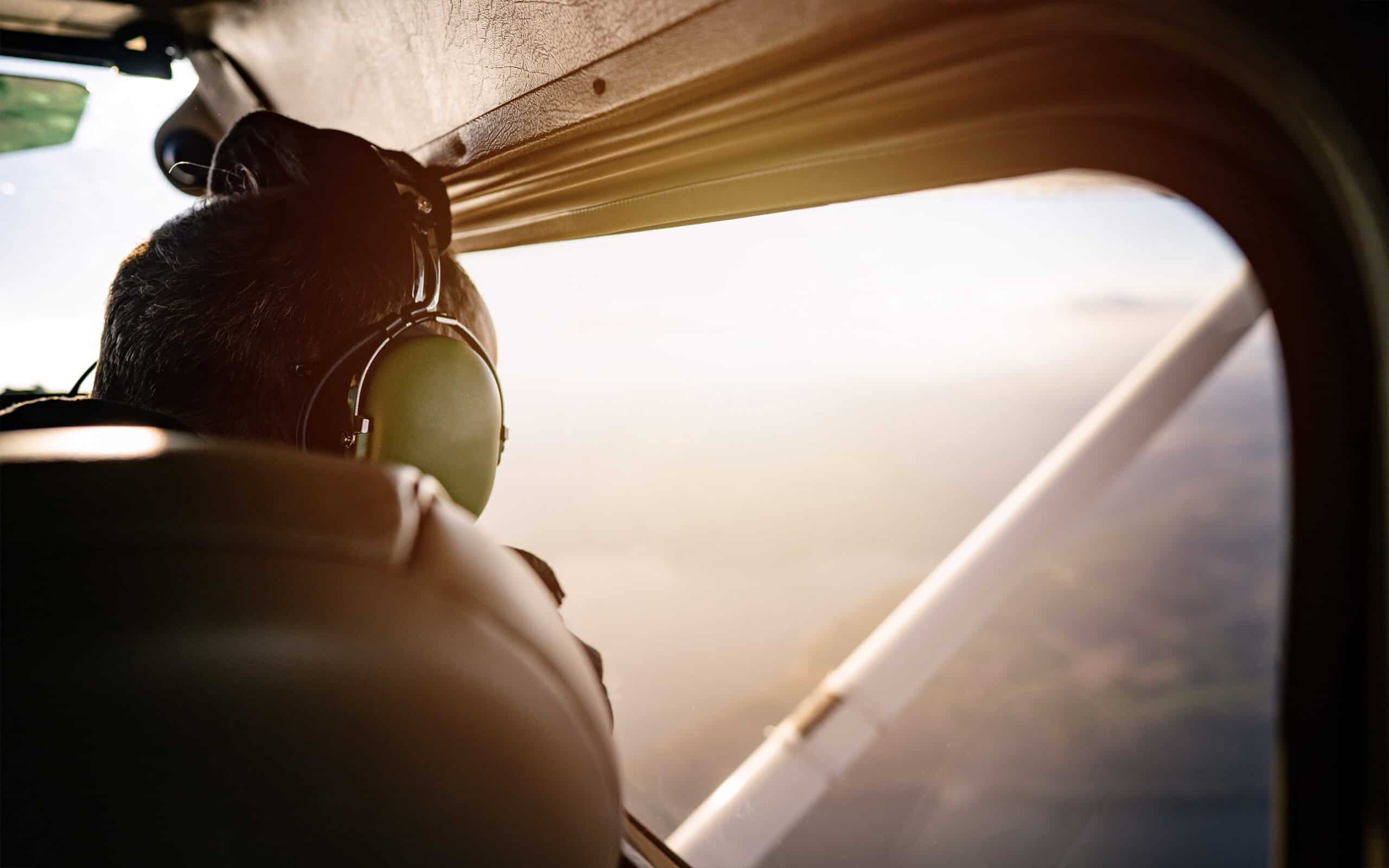
One of the most professional things any GA pilot can do is establish written personal minimums — and then hold themselves to them.
Personal minimums are self-imposed limits more conservative than the FARs. They account for your actual currency, recency, and proficiency — not what you’re legally allowed to do, but what you’re genuinely prepared to handle safely. They exist because the FAA minimums are designed for the average certificated pilot, not for you specifically on this particular day.
Building Your Personal Minimums Card
A complete personal minimums card covers several areas. For VFR flight, define your ceiling and visibility minimums — the actual numbers below which you won’t go, not the legal VFR minimums. For IFR flight, define your approach minimums based on your recency and proficiency, not the published minimums. For crosswind, define your demonstrated limit and stick to it.
Furthermore, include currency requirements. How recent does your night flying need to be before you’ll take a night passenger flight? How many instrument approaches in the last 90 days before you’ll shoot an approach in actual IMC? Write it down. The decision made on the ground before you’re emotionally invested in completing the flight is always better than the decision made in the air when you’re ten miles from home and the ceiling is dropping.
Our Take on Personal Minimums
We’ll be straight with you: most GA accidents involving weather involve a pilot who knew they were pushing their limits and did it anyway. Personal minimums only work if you treat them as non-negotiable. The moment you start negotiating with yourself — “it’s just a little below my minimum, the destination is clear” — you’ve already lost. The discipline to say no when you’ve predetermined the answer is the whole point.
Radio Discipline and ATC Communication
Professional radio communication isn’t just about sounding good on frequency. It’s about clarity, brevity, and reducing the cognitive load on everyone — including yourself.
The formula for most transmissions is simple: who you’re calling, who you are, where you are, what you want. “Dayton Approach, Cessna 12345, 25 miles northeast at 4,500, request flight following to Columbus.” That’s it. No filler, no uncertainty, no fumbling.
Common Radio Mistakes That Undermine Professionalism
Several habits mark a pilot as inexperienced on the radio. Saying “with you” without any position or request. Acknowledging with “Roger” when you should be reading back an instruction. Stepping on other transmissions because you didn’t listen first. Using “any traffic in the area” when you should be self-announcing your position and intention specifically.
In contrast, professional radio discipline also means knowing when not to transmit. If ATC is managing a complex situation, don’t interrupt with a routine request. Hold, listen, and transmit when there’s a break. Silence on the radio is a skill.
Readbacks: Non-Negotiable
Read back all altitude assignments, runway assignments, hold-short instructions, and clearances. This isn’t optional and it isn’t formality — it’s the error-catching mechanism built into the ATC system. When you read back an instruction, ATC can catch and correct any misunderstanding before it becomes a conflict.
Post-Flight Debrief: The Habit Most Pilots Skip
Professional pilots debrief every flight. Not just the ones where something went wrong — every flight. The debrief is where learning happens, where small deviations get caught before they become habits, and where honest self-assessment replaces the ego-driven tendency to declare every flight a success.
A simple debrief asks four questions. What went well and should be repeated? What didn’t go well and needs to be corrected? What surprised me, and why? What will I do differently next time?
Logging Quality, Not Just Quantity
Your logbook entry is part of the debrief. Most pilots log the flight time and the conditions and nothing else. Specifically, a more useful logbook entry notes the approaches flown and their quality, any ATC interactions worth remembering, weather challenges encountered, and any technique you practiced. That record becomes a tool for tracking your proficiency over time — not just a cumulative hour count.
Additionally, consider using the NASA Aviation Safety Reporting System (ASRS) if you experience or observe anything that could affect safety. Filing is anonymous, protects you from certificate action in most cases, and contributes to systemic safety data. That’s a professional act.
The Professionalism Mindset: Continuous Improvement
Professional pilots never stop training. Not because the FAA requires it — because they understand that proficiency is not a permanent state. It requires maintenance.
Ultimately, flying like a pro means treating your certificate as a commitment, not an achievement. The checkride was the beginning. Every flight since has been an opportunity to either reinforce good habits or let bad ones take root. Professionalism is choosing — deliberately, repeatedly, every flight — to reinforce the good ones.
Make a habit of flying with a safety pilot regularly. Get an instrument proficiency check even when you’re current. Take a wings safety course. Fly with a CFI once a year just for a set of outside eyes. The pilots who’ve been flying for 30 years without an incident aren’t lucky — they’re deliberate.
The Carrier Deck Standard
Return to that aircraft carrier flight deck. Every person on that deck operates to a standard. The fuel handler in the purple jersey doesn’t improvise the fueling sequence. The plane director in yellow doesn’t wave off a launch because he’s having a bad day. The safety observer in white doesn’t look the other way on a protocol violation because it seems minor.
That standard is what keeps people alive. Your cockpit deserves the same standard. The airplane doesn’t care if you’re tired, rushed, or flying the same route you’ve flown a hundred times. It responds to physics, not intentions. Fly like a professional — every single time.
Frequently Asked Questions
What is flight discipline in general aviation?
Flight discipline is the consistent application of safe habits, standard procedures, and sound decision-making on every flight — regardless of experience level or familiarity with the route. It includes checklist use, pre-flight briefing, radio discipline, and adherence to personal minimums.
How do personal minimums differ from FAA minimums?
FAA minimums are legal floors — the absolute minimum conditions under which flight is permitted for a certificated pilot. Personal minimums are self-imposed limits that account for your individual currency, recency, and proficiency. They are always more conservative than the FARs and are set in advance, on the ground, before emotions or mission pressure can influence the decision.
How often should GA pilots get additional training?
At minimum, once per year with a CFI for a flight review. However, professional-minded pilots seek additional training more frequently — instrument proficiency checks every six months, simulator sessions before IFR seasons, and recurrent training whenever a new aircraft or new environment is introduced.
Sources
- FAA Risk Management Handbook (FAA-H-8083-2)
- NASA Aviation Safety Reporting System (ASRS)
- FAA Pilot Safety Brochures — Flight Discipline and Decision-Making
Written by the E3 Aviation Editorial Team. Explore more pilot resources at E3 Aviation Articles.